“The scan is normal.”
For most parents, those words would bring relief. For Matthew and Jenny Sanan, they became the most frightening sentence they would hear again and again.
Because when your child is still having seizures, sometimes dozens a day, “normal” doesn’t mean healthy. It means unanswered questions. It means living in the dark.
This is the reality that the Sanan family and their son, Declan, have lived with for the past ten years.
Meet Declan
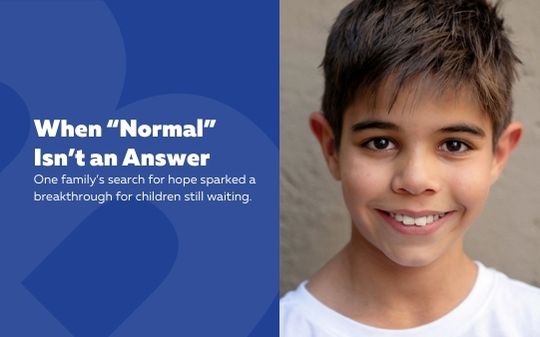
Declan (soon to be 12 in May this year) is the bravest person his parents know, but more than that, he is kind.
He has a warm, gentle nature, the kind that draws people in instantly. He loves playing Fortnite and Roblox, practises Taekwondo, and has a quiet determination that defines who he is. His parents describe his greatest strength simply as “trying.”
Declan has seizures. He recovers. And then he gets up and wants to carry on living. “That’s his superpower,” Matthew says. “He never gives up.”
A Childhood Marked by Waiting
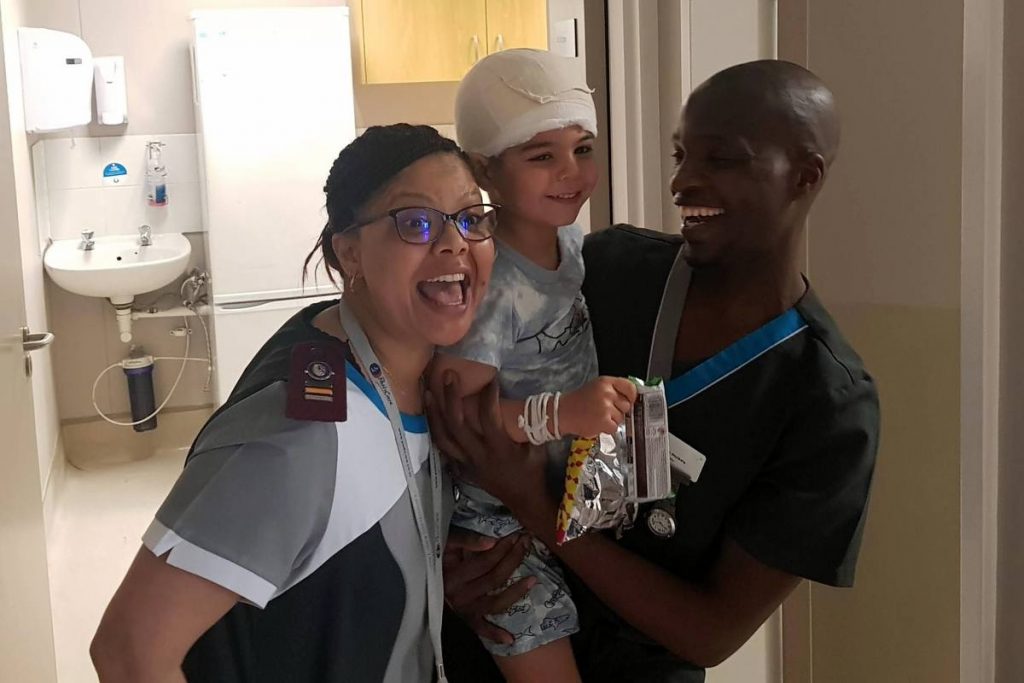
Declan’s seizures began when he was just two years old.
What followed was a decade of searching, endless hospital visits, tests, scans, genetic investigations, and late nights filled with fear and exhaustion. Each seizure brought the same unspoken question: What damage is this doing?
And still, the answers never came.
“You live with this constant, quiet desperation,” the couple explains. “You’re always hoping the next doctor might see something the others missed.”
But scan after scan came back the same. Normal.
Why ‘Normal’ Was the Hardest Result
People assume a normal scan is good news. For families like Declan’s, it’s the opposite.
“When your child is suffering, ‘normal’ just means we don’t know what’s wrong,” Matthew says. “Finding something, even something scary, would have given us hope. It would have meant there was a target. An end in sight.”
Instead, normal meant waiting. And darkness.
A Breakthrough That Changed Everything
Late one night, driven by desperation and hope in equal measure, Matthew searched online for new answers. He typed in four words: “AI in epilepsy.”
That search led him to the MELD Project, an experimental research initiative overseas. Matthew shared Declan’s story and sent through his son’s scans, scans that had been called “perfect” for years.
The first response came back uncertain. A low-confidence signal. Matthew thanked them, then mentioned something else: Declan had undergone seven MRIs over his lifetime. Could they look at all of them?
Weeks later, the answer came. The same hidden signal appeared in five out of seven scans.
Without showing the AI results, the team shared Declan’s scans with a world-renowned specialist. He spotted it too, becoming the first human to see what had been missed for a decade.
For the first time, there was clarity. For the first time, there was a plan.
From One Child to Many
That moment changed everything.
“If technology could find something that had been missed for ten years,” Matthew realised, “how many other children are still sitting with ‘normal’ scans, waiting in the dark?”
That question became the heart of Project Unseen.
Matthew began building his own system, not as a finished solution, but as a foundation. A way to give doctors another set of eyes. A way to help turn “incurable” into “treatable.”
Why the Community Stepped In
The technology needed to do this work isn’t simple, or cheap. It requires serious computing power, far beyond what most families or hospitals can access.
Matthew made a deliberate choice: instead of keeping this work overseas or private, he turned to the community. Crowdfunding allowed Project Unseen to be built here, for South African patients, alongside local doctors and researchers.
And the response was extraordinary.
The campaign didn’t just reach its goal, it surpassed it, raising over R200,000 from people who believed in the possibility of change. Every cent will be paid directly to the equipment supplier. The machine itself will be a shared community resource, dedicated to helping doctors flag what the human eye might miss.
What Hope Looks Like Now
Project Unseen is still in its early stages. Matthew is careful to manage expectations.
“This isn’t a finished tool yet,” he says. “Right now, I’m building the engine.”
But the vision is clear: a future where families don’t wait ten years for answers. Where “normal” doesn’t end the conversation. Where hope arrives sooner.
For parents still searching, Matthew and Jenny have one message:
“Pray. Trust your gut. If you feel there’s an answer out there, don’t stop looking. Technology is moving fast, and there is always hope.”
Turning the Lights On
Declan’s journey is still unfolding. Plans are being made. Steps are being taken. But because of one child, one family, and a community that chose to believe, the lights are beginning to turn on for others too.
Learn more about Project Unseen or follow its progress here: https://www.backabuddy.co.za/campaign/project-unseen-ai-for-invisible-epilepsy