
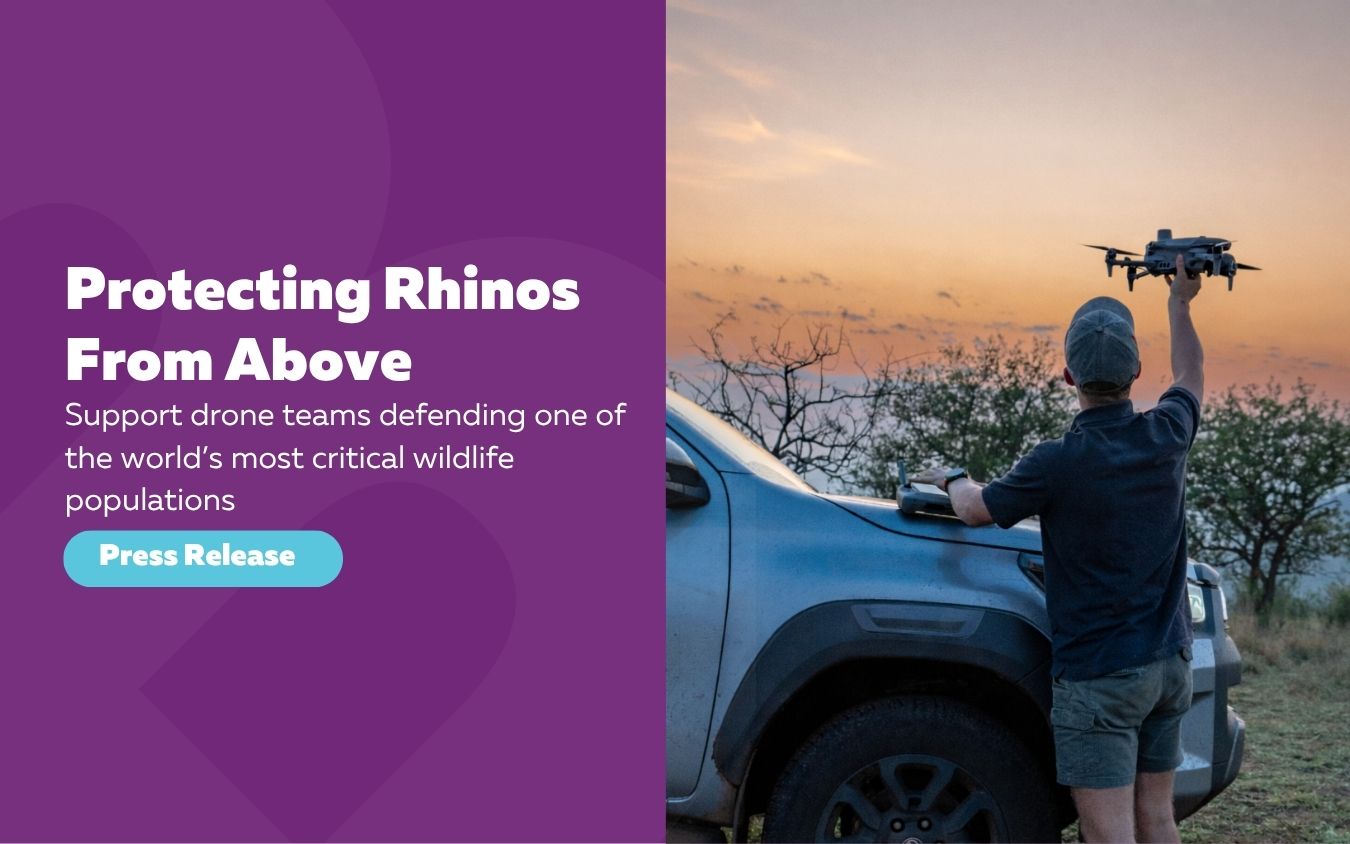
Ballito, KwaZulu-Natal — A frontline conservation drone team working to protect one of the world’s most significant rhino populations is seeking public support to expand its operations across KwaZulu-Natal.
A crowdfunding campaign launched by WildSky Foundation aims to raise R89,000 for critical equipment that will allow drones to remain operational in remote areas, strengthening aerial monitoring and helping rangers respond more effectively to potential threats.
Technology in the Fight Against Poaching
Across KwaZulu-Natal, conservation teams are tasked with protecting vast landscapes where endangered species such as rhinos remain vulnerable to poaching.
Traditional ground patrols remain critical, but monitoring large reserves with limited resources presents constant challenges.
Drone technology has become a powerful addition to conservation efforts, allowing teams to scan large areas from the air, track animal movements, and detect suspicious activity far more quickly than ground patrols alone.
“Drone technology dramatically improves the ability of rangers to monitor large and remote areas,” says Craig Lord, Co-founder and Operations Manager at WildSky Foundation.
“It provides rapid aerial visibility over terrain that would otherwise take hours to patrol on foot or by vehicle, allowing teams to detect threats earlier and respond faster.”
However, the effectiveness of drone patrols depends heavily on having reliable power systems in the field.
The Equipment That Keeps Patrols in the Air
The campaign aims to fund two critical tools that will allow the drone team to operate continuously in remote environments.
Drone Batteries – R54,000
Drone batteries determine how long a team can remain airborne during patrols. Additional batteries allow teams to extend flight time, cover larger areas, and respond quickly when threats are detected.
Vehicle-Mounted Inverter System – R35,000
Many conservation areas operate far from reliable electricity. A vehicle-mounted inverter allows drone batteries and equipment to be charged directly from patrol vehicles while in the field, ensuring operations can continue even in remote locations.
Together, these systems will significantly increase the drone team’s operational capacity.
“Drones are only effective if they can stay in the air,” Lord explains.
“This equipment allows teams to operate continuously, extending their reach across vast and remote landscapes where wildlife is most vulnerable.”
Protecting Wildlife Across Vast Landscapes
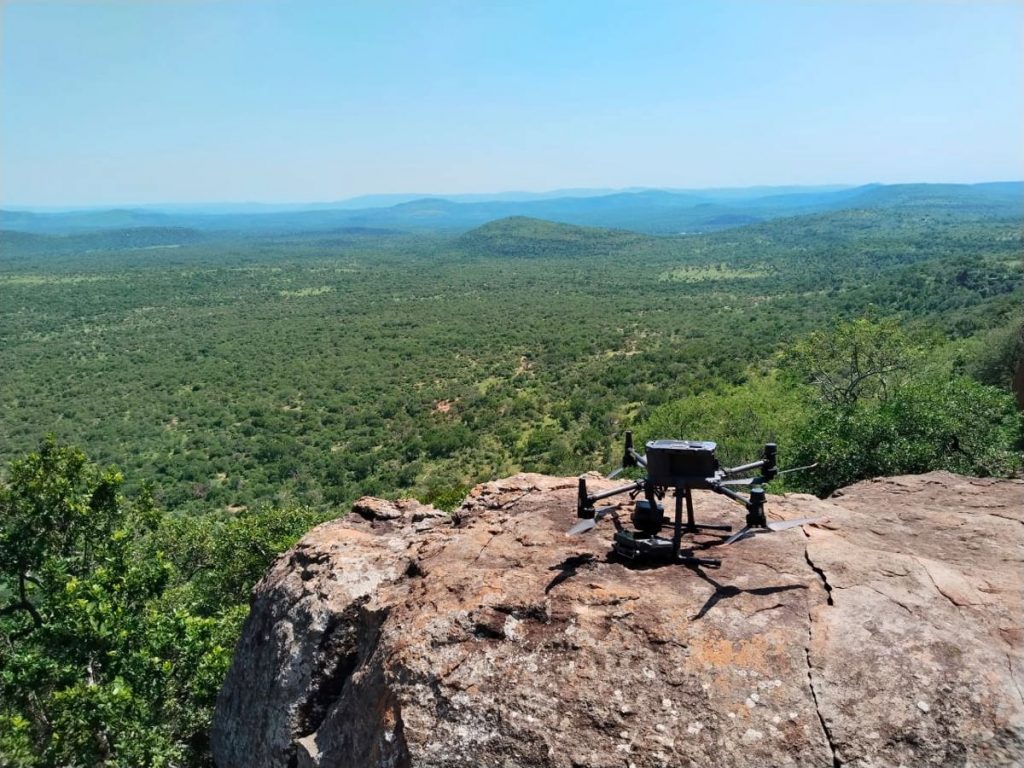
The project focuses on Hluhluwe–iMfolozi Park, one of Africa’s oldest and most important protected areas, covering approximately 96,000 hectares of wilderness.
With the right equipment, a single drone team can monitor tens of thousands of hectares of wildlife habitat.
The park is home to one of the most significant rhino populations remaining in the world — approximately 1,600 white rhinos and more than 350 black rhinos, along with other threatened species including elephant, cheetah and African wild dog.
“This is one of the world’s most critical rhino strongholds,” says Lord.
“Protecting this population is essential to the future survival of the species.”
This expanded aerial capability allows conservation teams to:
- Extend patrol coverage across remote reserves
• Monitor rhinos and other endangered species
• Detect suspicious activity early
• Respond rapidly to potential threats
For conservation teams working in difficult terrain, drone surveillance provides an additional layer of protection that can make a significant difference in preventing wildlife crime.
“The presence of drones also acts as a strong deterrent,” Lord adds.
“It changes how poachers operate and gives rangers a significant advantage.”
Innovation Driving Conservation
WildSky Foundation focuses on bridging the gap between conservation and innovation by ensuring frontline teams have access to the technology needed to protect biodiversity.
Drone technology has already proven effective in the park.
WildSky has worked closely with park management and ranger teams to develop and implement drone-supported anti-poaching operations, improving situational awareness and enabling faster response times.
Encouragingly, these combined efforts are already showing results.
“Recent interventions have led to a significant reduction in rhino losses to poaching,” says Lord.
“It shows that when you combine skilled rangers with the right technology, you can make a measurable difference.”
Through initiatives like this drone campaign, the foundation aims to strengthen and expand these gains.
Ready to Deploy
If the funding goal is reached, the impact could be immediate.
“We already have trained pilots, operational procedures and partnerships in place,” Lord explains.
“Deployment of the new equipment could begin within a few weeks.”
This means expanded aerial protection could be rolled out quickly across the park’s vast terrain.
How the Public Can Help
The campaign hopes to raise R89,000 to fully equip the drone patrol team.
Every donation helps bring the team closer to keeping their drones operational and expanding protection for KwaZulu-Natal’s wildlife.
“Every contribution helps place advanced technology directly into the hands of rangers on the front lines,” says Lord. “By supporting this campaign, people are directly helping protect one of the most important rhino populations in the world and ensuring these animals survive for future generations.”
To support the campaign or learn more, visit:
https://www.backabuddy.co.za/campaign/power-a-drone-team-protecting-kzns-rhinos