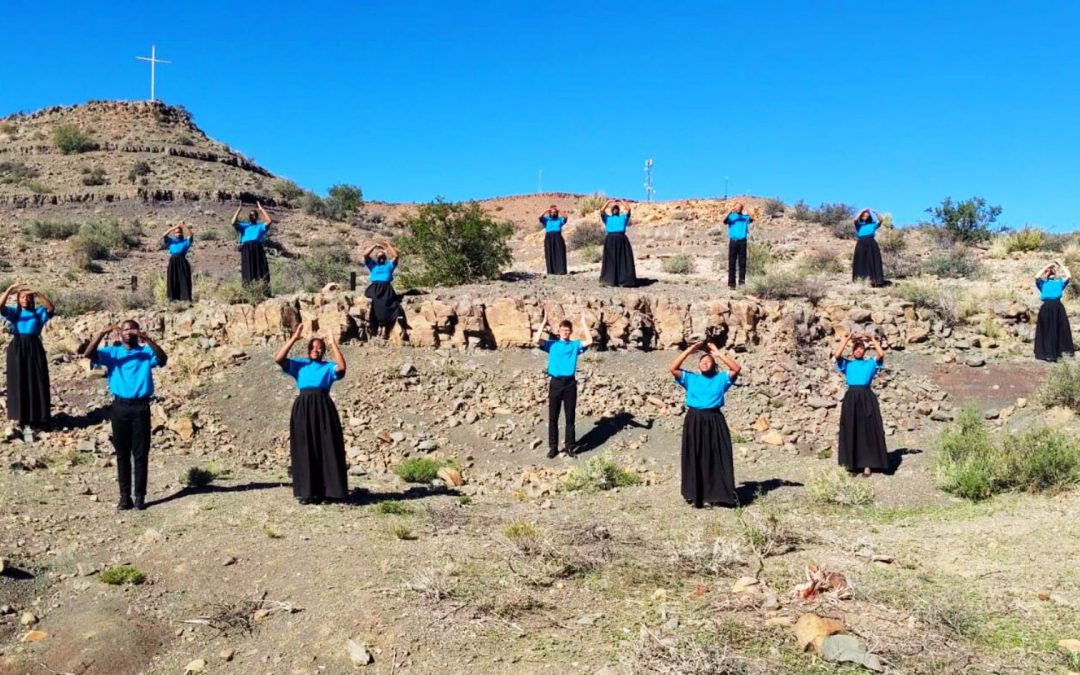
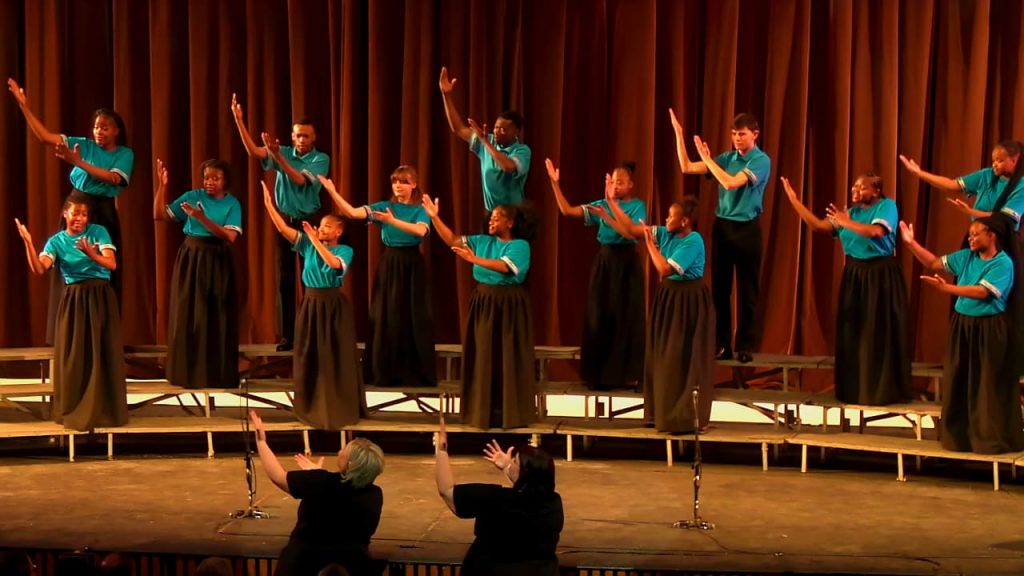
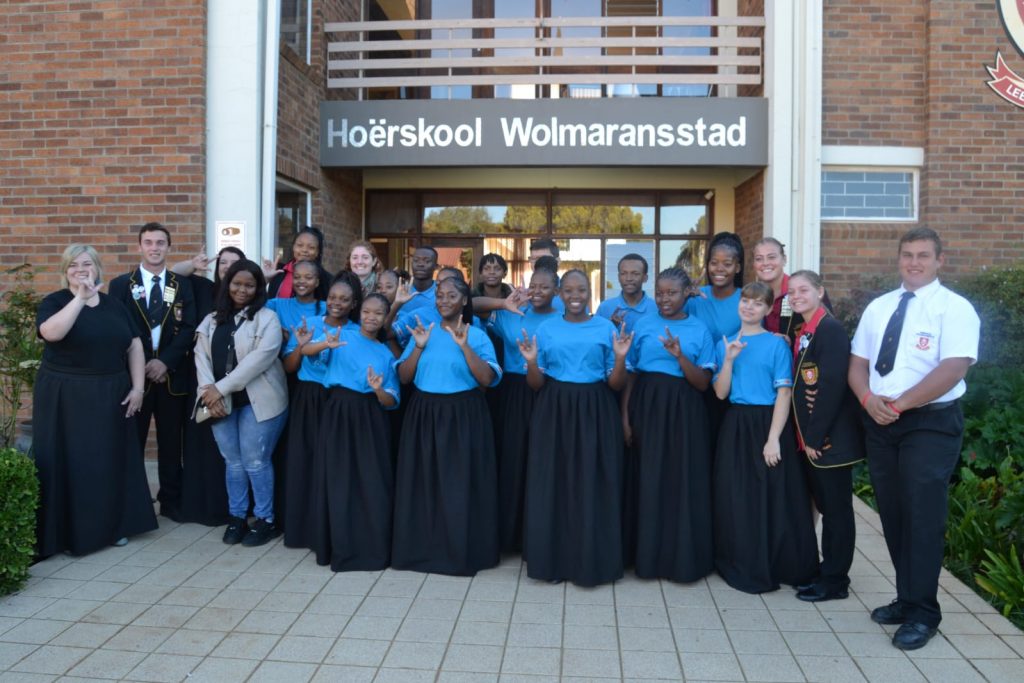
Transoranje School for the Deaf, nestled in Pretoria West, Gauteng, is home to an extraordinary group of young people who are showing South Africa, and the world, that music is not confined to hearing. The school’s Hands of Harmony Choir, made up of profoundly Deaf learners, recently completed a life-changing Karoo tour spanning five provinces and more than 3,000 kilometers, leaving audiences inspired and eager for more.
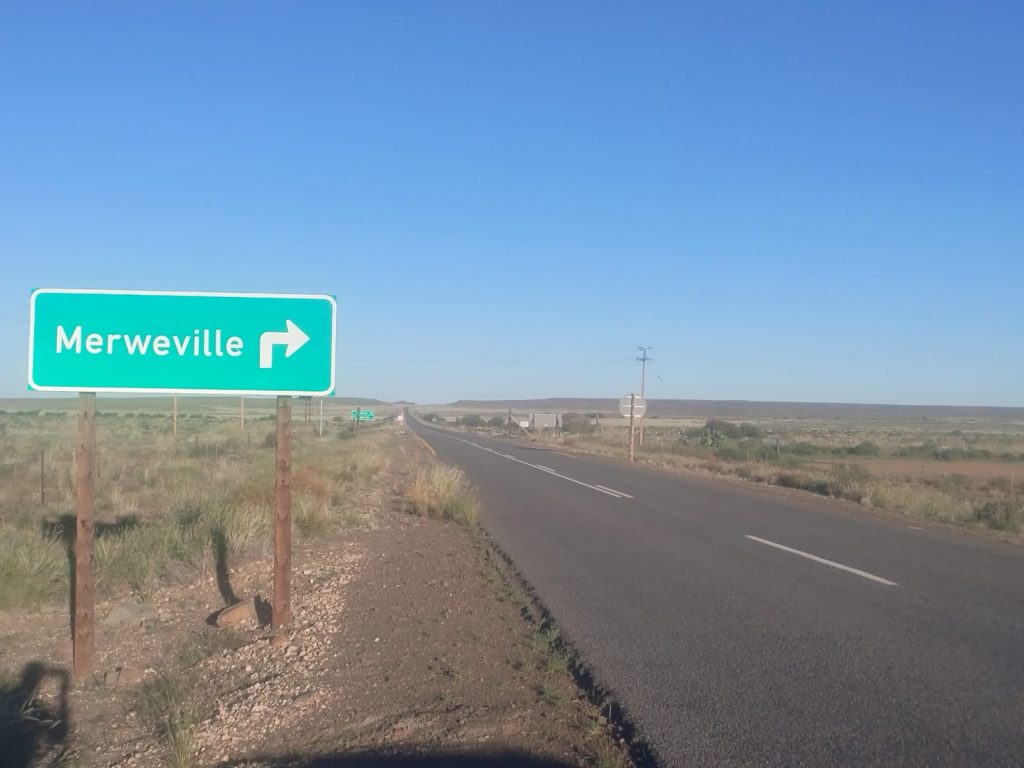
The tour saw the choir performing in towns such as Sutherland, Merweville, Bloemfontein, Kimberley, and Wolmaransstad, with their main highlight being a moving performance at the Merweville Dankfees in the heart of the Karoo.
Everywhere they went, they were met with standing ovations. Audiences, many of whom had never experienced music visually before, were astonished as songs were interpreted into South African Sign Language (SASL), rhythms were felt through vibrations, and stories were told with hands, faces, and spirit.
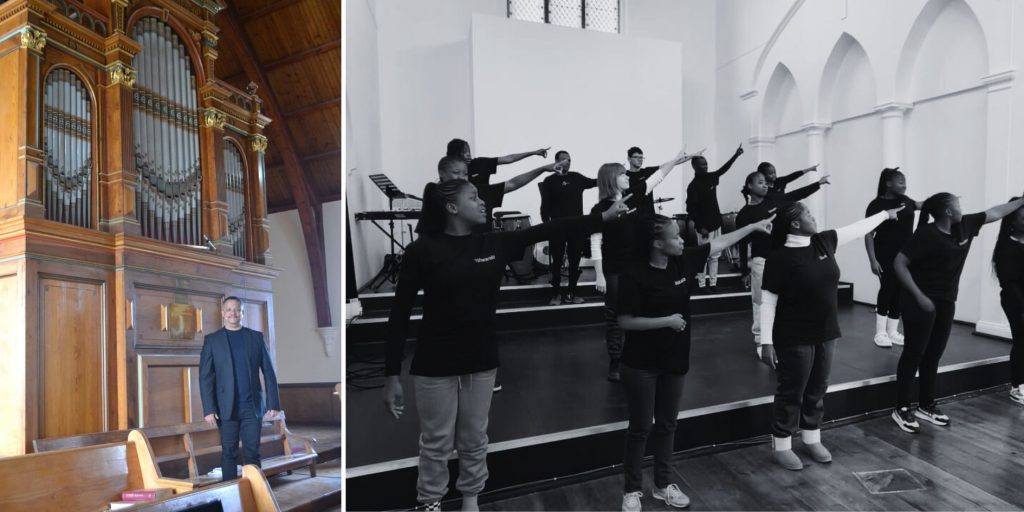
For the learners themselves, the journey was equally transformative. They discovered the power of vibration through church organs that shook the wooden floors beneath their feet, or the deep hum of motorbikes at the Bloemfontein Bikers Club. They marveled at natural wonders like the Gariep Dam’s rainbow spray when the sluice gates opened, the Kimberley Big Hole, the giant wind turbines, and even the magic of the night sky at Sutherland’s planetarium. For many, these were first-time experiences, as unforgettable as the performances themselves.
As one choir member explained: “I feel the rhythm through the floor and speakers, and I watch my conductor’s hands, body movements, and facial expressions.”
How the Deaf community creates music
To many, the idea of a Deaf choir may sound impossible. But at Transoranje, music is about more than sound, it’s about connection, presence, and creativity.
The learners use vibrations as their compass. Deep bass and organ notes resonate through floors and walls, allowing them to physically “feel” rhythm. Their conductors, Megan Bester and Carmen Bredenkamp, guide them visually through expressive gestures, facial cues, and body movements. Lyrics are translated into SASL, making each performance a blend of language, rhythm, and storytelling that bridges Deaf and hearing audiences.
Music collaborator Rudi van Wyk, who toured with the choir, describes the experience as life-changing:
“Deaf people do not want to be defined by their hearing ability, they live full, normal lives, with the same hopes, dreams, and needs as anyone else. This journey changed the way I see music, communication, and the power of human connection.”
Rudi shared how everyday environments became part of the music: the pulsing vibrations of motorcycles, the rushing water at Gariep Dam, even the silence of the Karoo night sky, all woven into a sensory tapestry the learners could experience. “Waar Stilte Sing (Where Silence Sings) showed us that rhythm can be felt, dynamics can be seen, and music is truly a universal language,” he said. “Waar stilte sing” was composed by Prof. Theo van Wyk from the University of Pretoria, with lyrics by Rudi van Wyk. Prof. Van Wyk is a leading South African organist and composer, known for bridging tradition with innovation. They were inspired after realising that Transoranje learners experienced the powerful vibrations of the organ. This moment sparked the vision to write a composition built on sound that can be felt as well as heard, allowing Deaf learners to fully share in the music. Rudi’s lyrics capture the vast Karoo landscape and its silent beauty. The work was premiered and officially released for the first time on the Karoo Tour.
Lessons for audiences and learners alike
One of the most moving elements of the tour was watching how audiences engaged with Deaf culture for the first time. Instead of clapping, crowds quickly learned to raise their hands in the traditional Deaf way of showing praise. Children in the audience asked questions about SASL, eager to try their first signs. Concerts became moments of dialogue and awareness, not just entertainment.
Audiences were struck by the learners’ confidence and joy. Many said they had never seen music come alive so visually, and they left with a deeper appreciation for Deaf culture. They learned about traditions like sign names. This is where the Deaf community gives a specific “name” according to a physical feature that stands out to them from the person, as names are not finger spelled. This is a special gift as it can only be given by the Deaf community. They also saw that Deaf children’s lives, hopes, and dreams are no different from anyone else’s.
For the learners, the tour was just as enriching. They gained confidence, teamwork, and stage presence, learning to adapt to long travel days and packed schedules. Teachers reflected that the learners returned with a stronger sense of identity and pride: proof that “Deaf can”.
A campaign to keep the music alive
The success of the Karoo tour has sparked a renewed dream: to take the choir on a second regional tour in 2026 while also ensuring they can perform throughout the year at festivals, Deaf Awareness Month events, and community concerts. To make this possible, the school has launched a revamped crowdfunding campaign on BackaBuddy.
Their target is R55,000, which will cover essentials such as:
Transport and tolls – R16,000
Meals and catering – R10,000
Accommodation – R5,000
Performance wear and uniforms – R9,000 total
Festival entry fees – R5,000
Other performances across the year – R9,000
During their first campaign, the choir raised R12,400 from 8 generous donors, funds that helped make their Karoo tour possible in 2025. With additional in-kind sponsorships and donations, they stretched that budget to cover essentials like travel, food, and even a much-needed bass speaker. Now, as they look ahead to their next dream, a regional tour planned for 2026, the school has set a new target of R55,000. At present, fundraising for this upcoming goal has yet to begin, making community support more vital than ever.
As the school explains: “This is about more than another tour, it’s about creating opportunities for our learners to showcase their talent, share Deaf culture, and inspire communities across the country.”
More than music
For Hands of Harmony, music is not simply performance, it is identity, advocacy, and hope. Through every song, they remind audiences that Deaf culture is rich, proud, and full of talent. They show that inclusion is possible, that art transcends barriers, and that silence can indeed sing.
By supporting their campaign, South Africans can ensure these young performers continue to grow in confidence, explore the country, and prove that “Deaf can.”
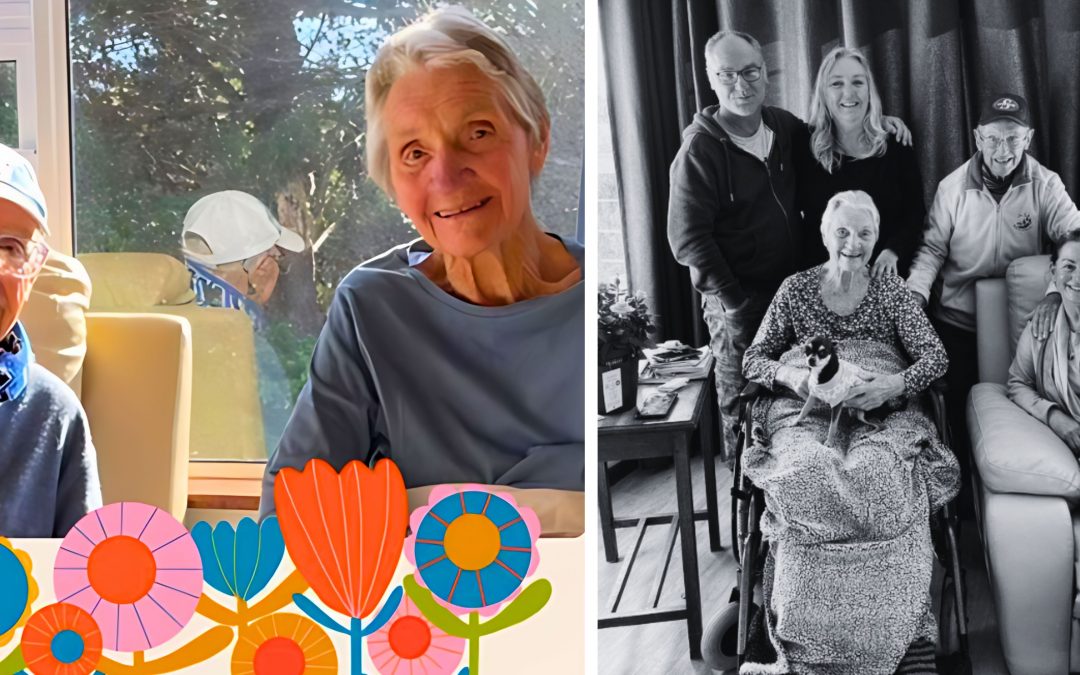
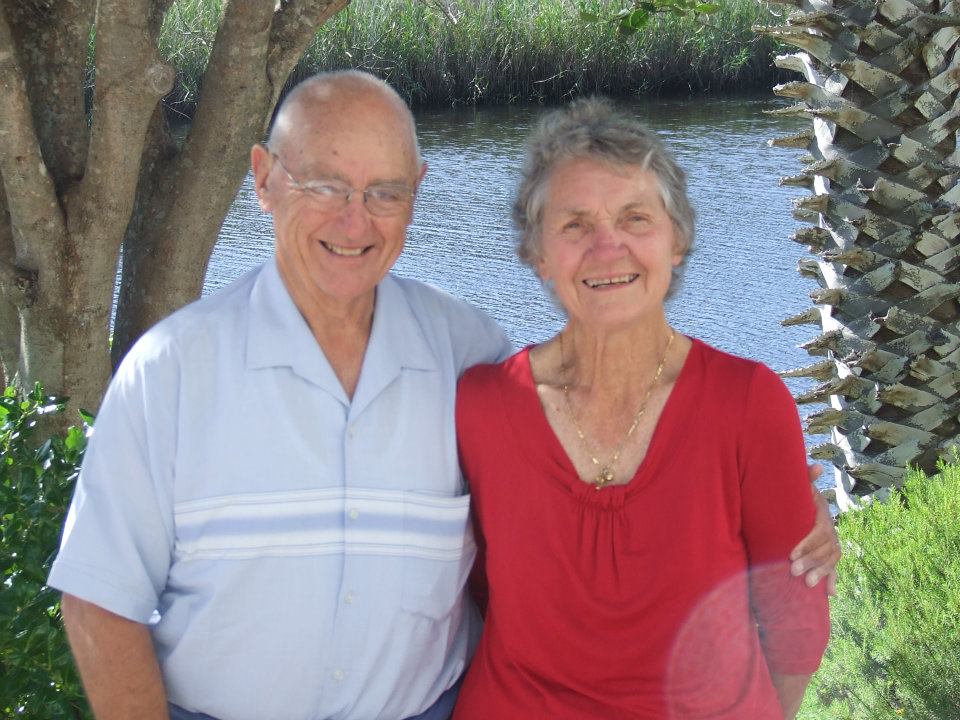
Fred Benning (88) from Fish Hoek (Cape Town) is proving that determination and love can carry you through even the trickiest online hurdles. As South Africa marks Deaf Awareness Month this September, his story highlights what’s possible for people living with hearing loss who want to raise funds and share their voices. Profoundly deaf and a bilateral cochlear implant user, Fred launched a crowdfunding campaign on 20 June 2025 to support his wife of 86 years (and also as a birthday present), Denise, who is now paraplegic after White Spinal Cord Syndrome and requires full-time care. With patient guidance and a little humour, he turned devotion into action—one careful step at a time.
A determined love story, 64 years and counting
Denise is the kind of person who has spent a lifetime giving: a mother, community volunteer, and quiet doer. After a rare post-surgical complication left her permanently paraplegic, daily life changed overnight. Full-time care, wound care, physio, supplies, and non-chronic medication now stretch well beyond what medical aid covers. The family’s goal is simple: dignity for Denise, comfort at home, and a little breathing room each month.
For Fred, the decision to act was immediate. He might be 88 and profoundly deaf, but he is, in Tess’s words,
“an extremely determined bugger.”
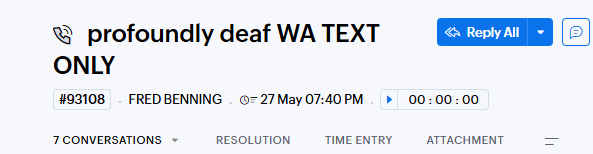
Early messages landed in the customer-support inbox flagged: “PROFOUNDLY DEAF, WHATSAPP ONLY.” A chuckle followed—and then the work began.
There were dropped lines and do-overs; at one point, after Tess emailed to say Patience, the carer, could help set things up, Fred replied asking how on earth she knew about “Patience”—possibly forgetting the thirty-minute phone call that happened the week prior, with Patience relaying every sentence to Fred as it progressed. Through it all, the love story stayed centre stage: a husband doing everything he could for the woman who has given so much to others.
What it takes to start a campaign when you’re living with hearing loss
Step by step, the team and family became Fred’s champions in the truest sense: supporters who helped navigate the platform while keeping the campaigner’s voice at the centre.
“We painfully went through every step very slowly over the phone,” says Tessa Rae Van Rensburg from the BackaBuddy team. “Just like my granny, Fred can be quite hasty in pushing buttons—we had to start over a few times. If this experience didn’t teach me patience, I don’t know what would. It also showed me that 88-year-olds can indeed use the platform when the love is strong enough, and being deaf doesn’t have to hold you back.”
The breakthrough came when Fred’s son, Alex Benning, joined as a co-champion. With Alex on board, uploads, forms, and verifications fell into place. Patience stayed close, relaying instructions and keeping spirits steady. Fred’s cochlear implants helped a little; clear written steps, screenshots, and kind repetition helped a lot. In the end, the page went live with photos, a heartfelt story, and a transparent breakdown of costs that donations would cover: Patience’s salary, Denise’s medication, and any outstanding medical bills or shortfalls not paid by medical aid. In every sense, this was inclusive crowdfunding in action—guided by champions, owned by the family’s voice, and built on patience.
How hope turns into help
This September’s focus on Deaf inclusion is more than a calendar moment; it is a call to action. Since launching on 20 June 2025, the campaign has received support from 11 donors—R18,100 given on the platform and a further R10,000 contributed off the platform—toward a goal of R300,000. Every contribution lightens the family’s monthly load and gives Denise the comfort and care she needs. It also honours a marriage of 64 years—and the relentless love of a husband who simply refuses to give up.
If you’ve ever wondered whether a loved one living with hearing loss could start a crowdfunding campaign, let this be your sign: it’s challenging, not impossible—and a champion makes all the difference. And if you’re deaf or hard of hearing and thinking this platform isn’t for you, think again. Find a trusted person to sit alongside you, create a short video with subtitles, add a few photos, and tell your story in your own words. If Fred can do it, so can you—and you’ll find a patient team on the other side, ready to walk you through one step at a time.
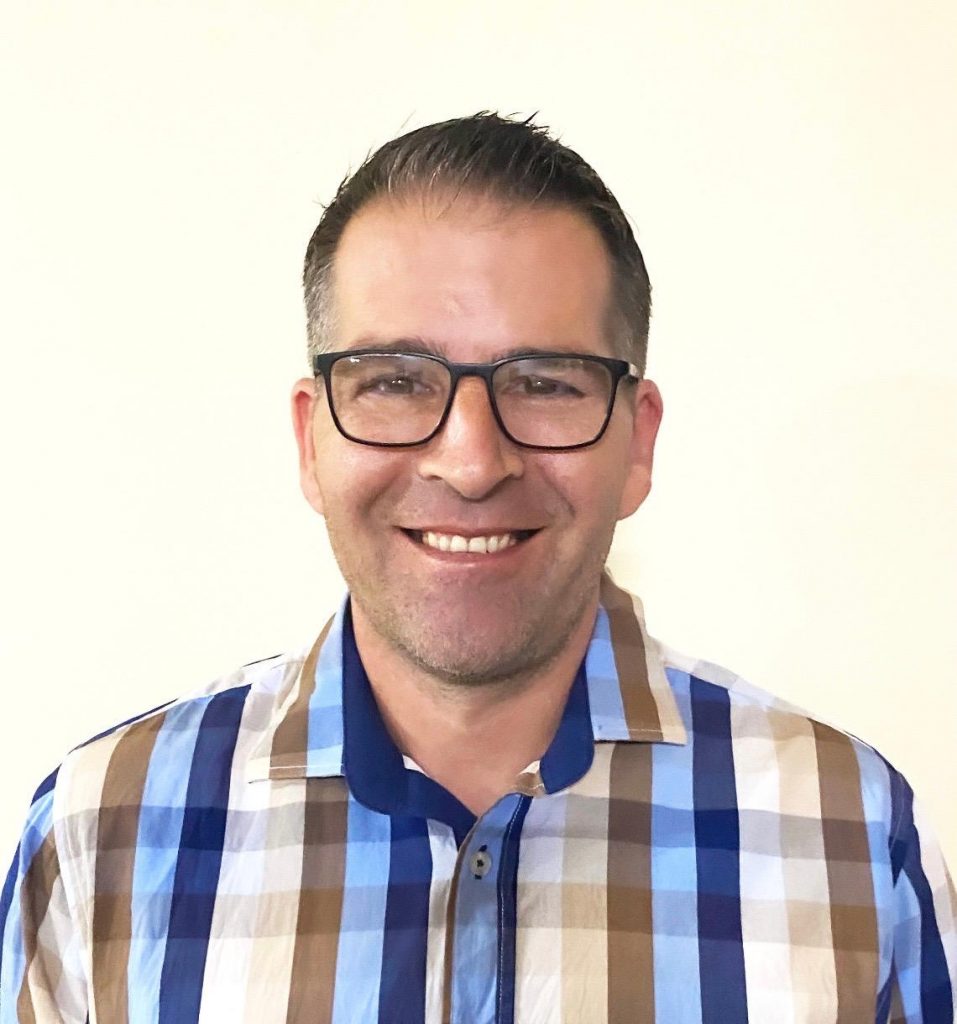
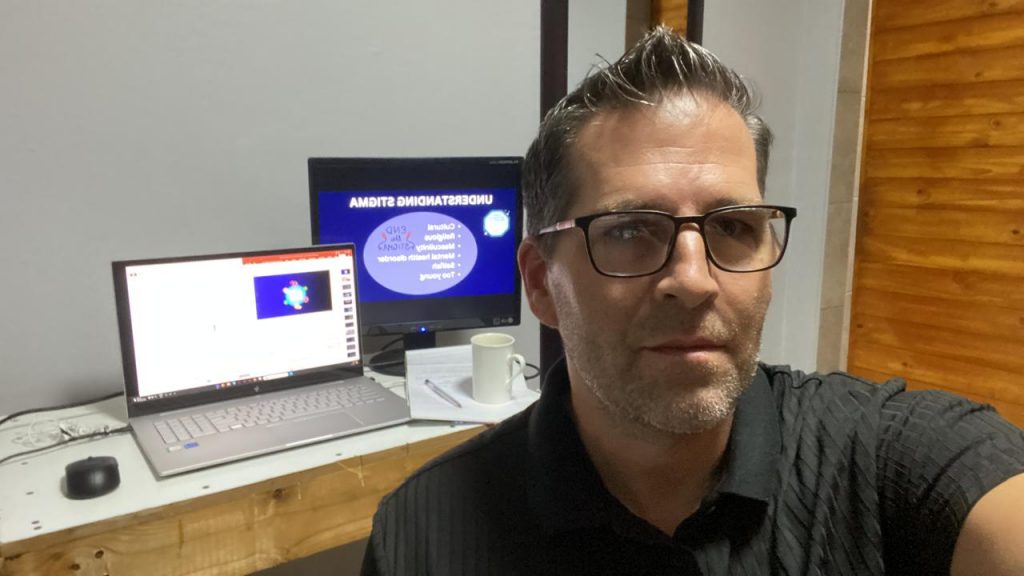
The 10th of September—World Suicide Prevention Day—South Africa must face a crisis we often avoid. Lino Muller(49), CEO of SafeTalk, is asking us to answer with compassion and action: training teachers, parents and community leaders to spot warning signs, ask brave, caring questions and connect people to life-saving help. By prying open the silence, he’s starting a healing movement where children can speak and adults feel equipped to hold the big, scary word “suicide” with steadiness. To keep this work moving, he’s launched a community crowdfunding initiative so that the hope that SafeTalk delivers to so many can keep moving forward.
The person behind SafeTalks
Lino speaks English, Afrikaans, German and conversational Sesotho, shaped by a life moving between South Africa, Lesotho and Austria. He keeps grounded with exercise, connected breathing and quiet reading—but what steadies him most is the courage he witnesses in ordinary rooms.
“Every session becomes an ‘aha’ moment,” he says. “People who have hidden their pain for years finally feel safe to speak.”
Twenty-five years ago, Lino’s brother died by suicide—an experience that taught him how stigma fuels silence.
“One of the strongest myths around suicide is that it’s selfish,” he reflects. “In reality, it’s the opposite. People who reach that point often believe their loved ones would be better off without them.”
Determined to change this narrative, Lino founded SafeTalk(2024) in Johannesburg, Gauteng, drawing on international best practice while tailoring the content to South African realities where resources are scarce and the need is great. SafeTalk’s focus is practical: awareness, anti-stigma education, and community training that equips ordinary people to notice distress, open a safe conversation, and connect someone to professional care.
What does a SafeTalks Workshop look like?
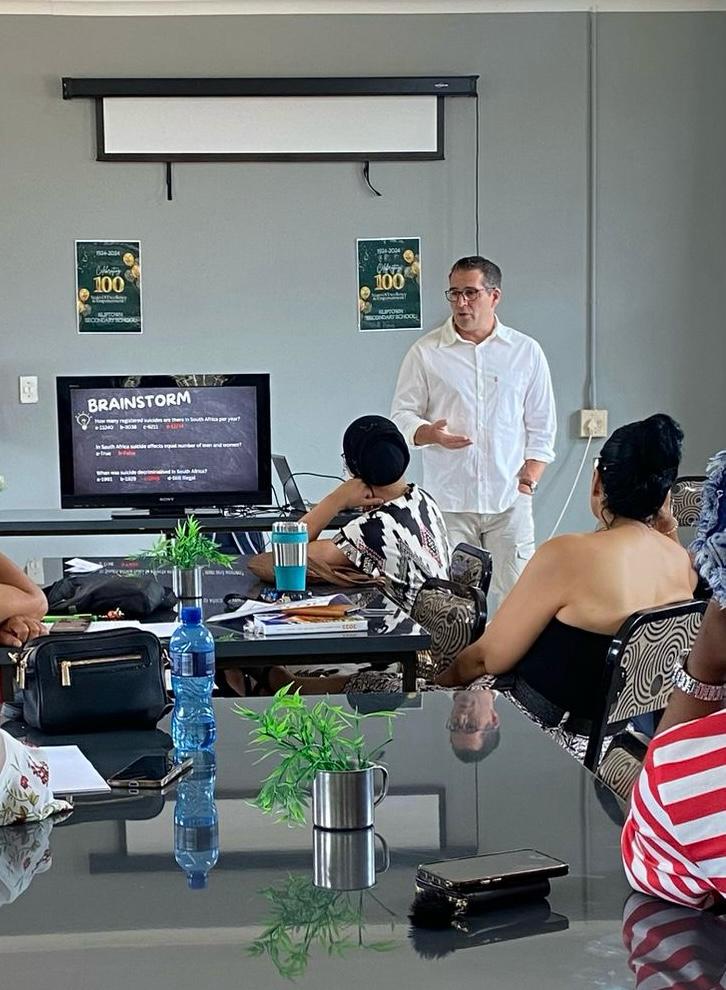
Inside a three- to four-hour SafeTalk workshop, participants practise how to ask directly about suicide in a safe way, listen without judgement, and guide a person to support.
“People leave feeling more confident to recognise the signs,” Lino says.
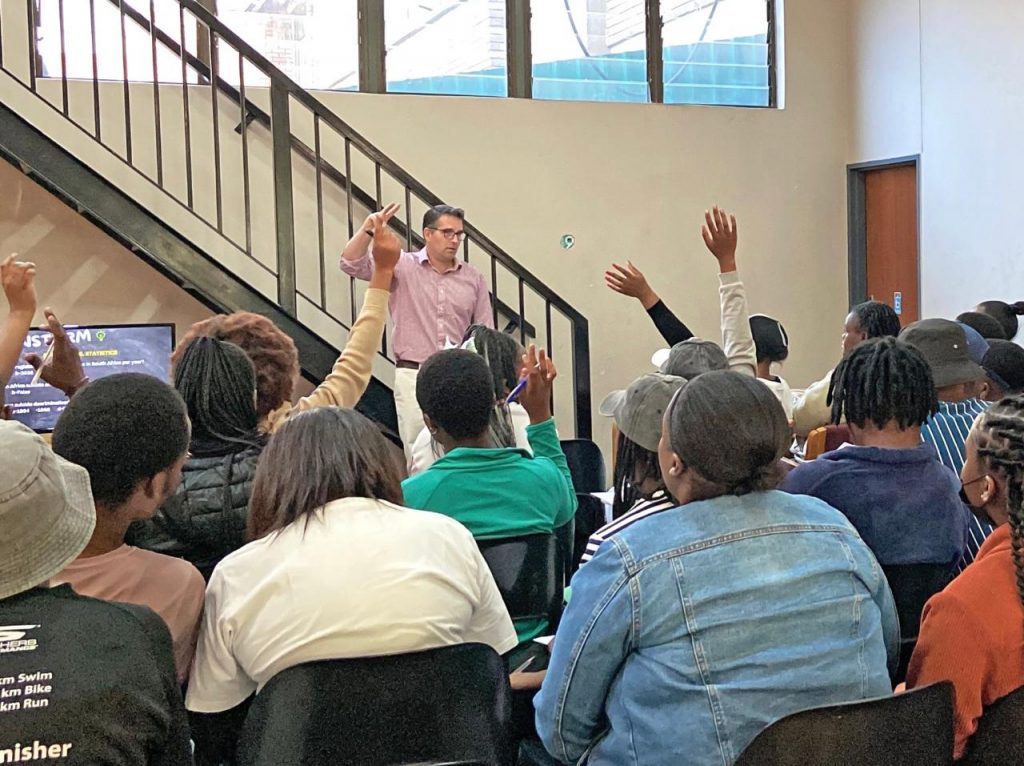
At a large primary school, a principal assured Lino there were “no mental-health issues” because discipline was strict. Lino invited 200 learners to stand, then to sit if a statement resonated: Have you ever gone without food? Do you have problems you can’t talk about? Do you feel ashamed sharing your struggles? By the third question, every learner was seated. He then asked them—anonymously—to write one thing they would never tell anyone. As he read a handful aloud, the room heard stories of self-harm, anxiety, depression and suicidal thoughts. The principal wept. In private, she thanked Lino and said her approach would change. It was a stark, compassionate awakening: even where adults believe “there are no problems,” young people are carrying heavy, hidden burdens. SafeTalk exists to make those burdens visible—and bearable—by giving communities safe language, clear steps and real pathways to support.
Why the work of SafeTalks is so important
Official figures suggest around 14,000 South Africans die by suicide each year—already a national emergency—and frontline experience shows many cases go unreported. The pain isn’t confined to teens; middle-aged adults are increasingly at risk too, often under the same roof. That’s the hard truth. The hopeful truth is just as real: when even one trained person is present in a school, clinic or workplace, the chances of someone reaching out rise dramatically. SafeTalk’s three-to-four-hour workshops turn fear into readiness—so the next time a learner whispers “I’m not okay,” someone nearby knows what to do.
“World Suicide Prevention Day is about more than awareness,” he says. “It is a call to end the silence, to see each other fully, and to create communities where no one feels invisible in their pain.”
SafeTalk is based in Johannesburg but also runs online workshops nationwide and travels where resources allow, ensuring access for communities that rarely receive specialised training, and in turn hope for those who didn’t know speaking out was ok.
What R150,000 makes possible
Lino has carried roughly 98% of costs himself to date—training sessions, support groups, transport, venues, even borrowing equipment—because the need outpaced the funding. The BackaBuddy campaign seeks R150,000 to keep doors open and widen the circle of care:
Training for teachers, parents, community leaders (and, as resources grow, nurses and police).
Educational materials & awareness that reduce stigma and spread simple, lifesaving steps.
Outreach to under-resourced and rural areas where help is scarcest.
Dignity support—food, clothing and care—so conversations about mental health can land where stomachs aren’t empty.
Every rand turns into seats in a room, pages in a hand, fuel in a car, and—most importantly—confidence to speak out. As of now, early donors have contributed, and the gap to the goal is where you can make the difference.
A word from the CEO of LifeTalk himself
When we asked Lino what he would say to someone who felt like a burden he replied:
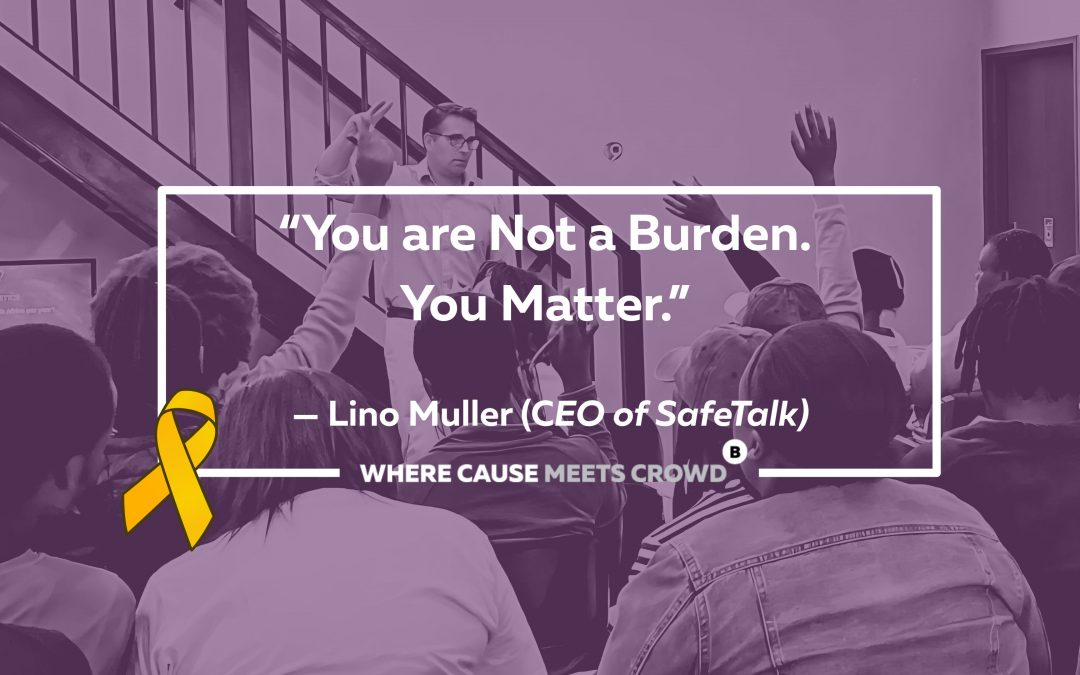
“You are not a burden. You matter. You’ve been carrying something heavy alone for too long—please reach out. One small step, one conversation, can start to lift that weight.”
For families, peers and colleagues, his advice is practical: show up, listen without judgement, check in again tomorrow, and help connect a person to care. Immediate Support For immediate support, South Africans can contact the SADAG Suicide Crisis Line on 0800 567 567, or WhatsApp 076 882 2775 / 087 163 2030. With steady backing, SafeTalk plans to complement these services with its own call-centre capacity to meet growing demand.
Conclusion
A once-off or recurring donation means more schools reached, more adults equipped, more children heard before harm. But the movement is bigger than money. Hope starts with one conversation: today, ask your classmate, your colleague, the shop attendant, the woman waiting for a taxi, “How are you—really?” A simple question can provide hope and maybe even save a life, because we are not meant to walk it alone. If you would like to book a workshop or find out more about SafeTalk, visit Safetalk.
Call to Action
Here’s how you can help today in 3 steps:
Share this story with friends, family and online communities.
Support with volunteer time, venues, printing, transport or food parcels.
Donate—every rand counts and directly powers training, support groups and outreach.
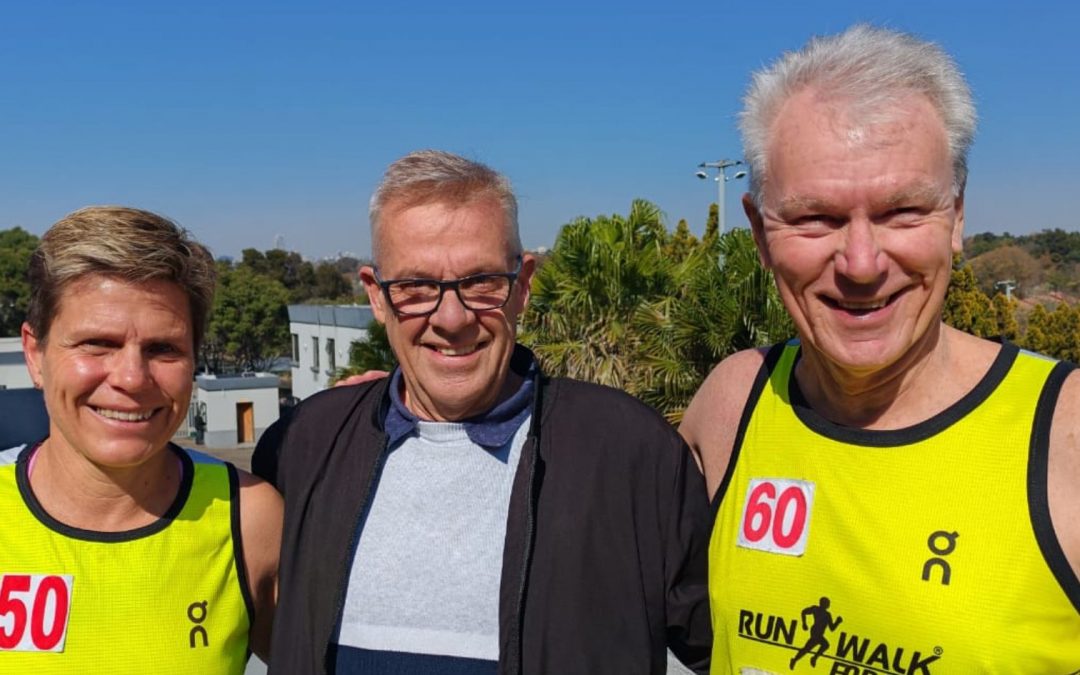
Pictured above: Nickey Seger, Dave Spurgeon and Grant Clack.
Nickey Seger (52) from Roodekrans, Gauteng, is no stranger to standing by those she loves. But when her friend Dave Spurgeon (65) from Bryanston, Sandton, was diagnosed with throat cancer in July 2025, she knew she needed to do something extraordinary to help.
Within days of hearing the news, Nickey and her partner, Grant Clack (63), launched the Hope Powers Dave campaign on BackaBuddy. Their mission: to raise R500,000 so Dave can begin urgent chemotherapy and radiation. To inspire support, they committed to running 21.6 km every day for 30 consecutive days — totalling a staggering 650 km.
“When I heard Dave had throat cancer and no medical aid, my heart just sank. This is the reality for so many South Africans. I just felt the need to make a difference and help him in the best way I know how,” says Nickey.
A Friendship That Sparked Action
Nickey met Dave about 18 months ago at a friend’s birthday party, and in that short time, their bond has grown into a strong friendship. What struck her most was Dave’s humility and kindness. Despite his own hardships — including losing his medical aid when he was retrenched during Covid — Dave has always been generous and supportive of others.
“Dave is thoughtful, compassionate, and giving. He has often taken people under his wing, offering guidance, support, and encouragement,” says Dianne, his partner’s sister. “He has truly added value to those around him.”
For Nickey, standing on the sidelines wasn’t an option.
“I believe we are stronger together. Anyone can make a difference — and if my running can give Dave a fighting chance, then every step is worth it,” she says.
“Time is not on our side, which is why this campaign is so important,” explains Nickey. “The funds will go directly to covering Dave’s urgent medical needs and giving him a chance at recovery.”
Community of Care
For Nickey, this journey is about more than fundraising — it’s about proving the power of community. The campaign has drawn messages of encouragement from near and far, with friends describing Dave as fun-loving, dependable, and deeply devoted to his family.
“He’s been more than a friend — he’s family,” says Dick Roberts, who has known Dave for 30 years. “His humour, energy, and love for his daughters make him someone truly special.”
Nickey hopes their story will inspire others to get involved.
“Every donation, no matter the size, and every share of the campaign helps. Together, we can make sure Dave gets the treatment he urgently needs,” she says.
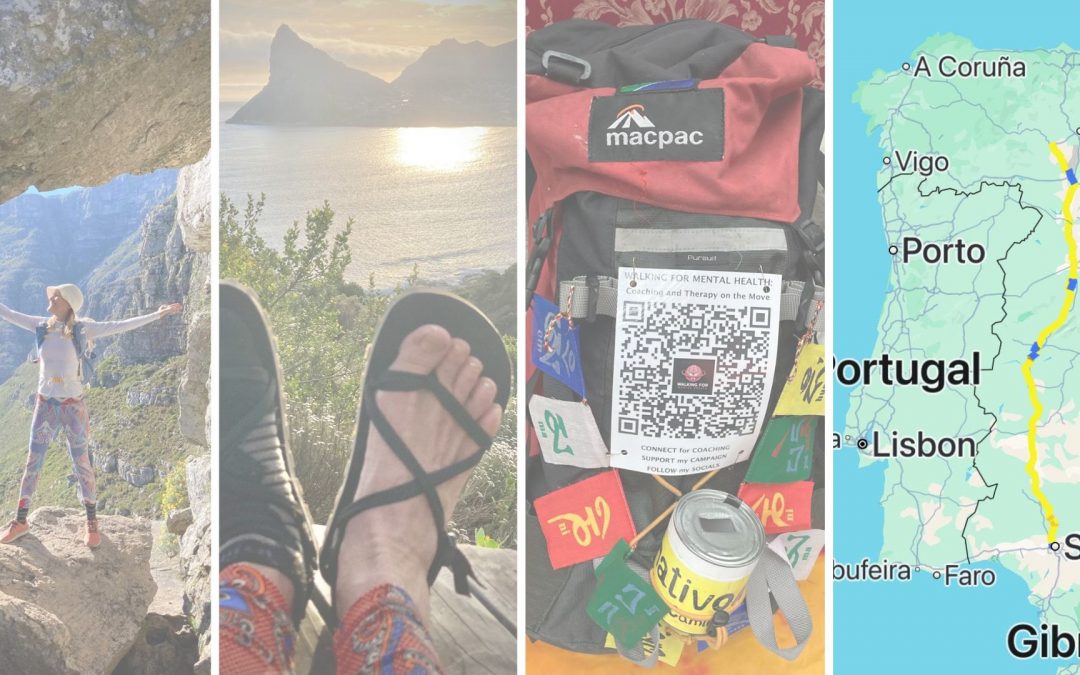
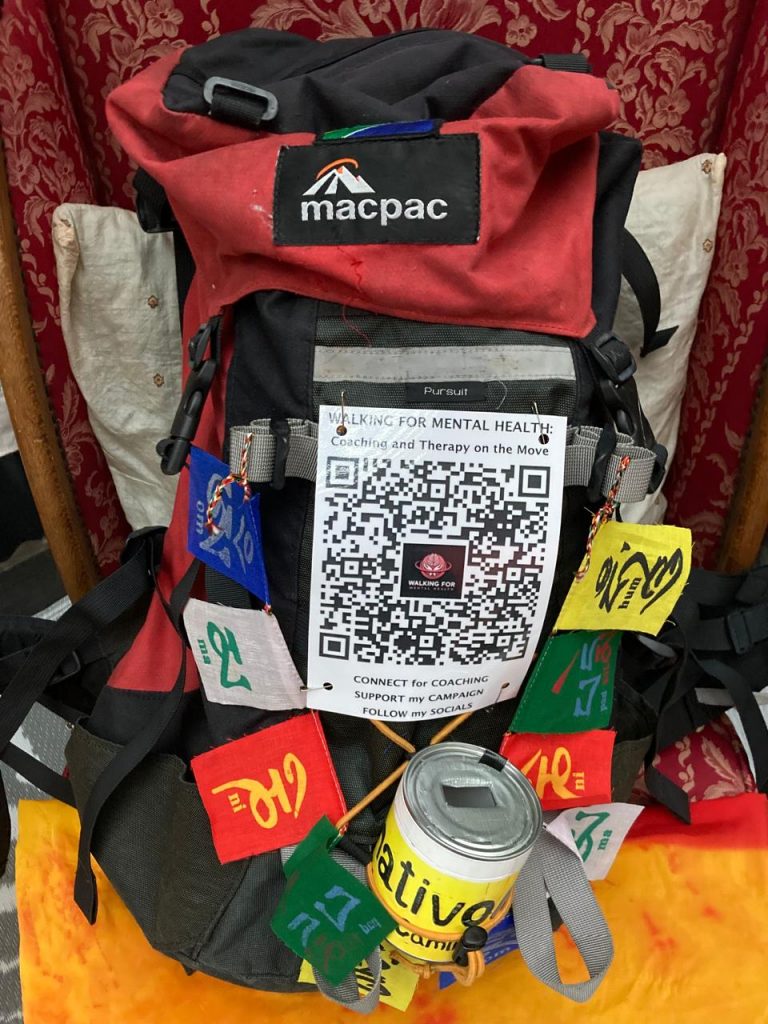
On 17 September, Hout Bay therapist, coach and wilderness guide, Penelope van Maasdyk, will set out across northern Spain to walk up to 1,000km on the Camino de Santiago—linking the Del Norte, the Primitivo and sections of the Via de la Plata—by 30 October. Her mission, Walking for Mental Health, is to offer free on-trail coaching, walk-and-talk support, and craniosacral therapy to fellow pilgrims processing grief, change or trauma, while raising R55,000 to keep the journey safe and simple. Since launching her crowdfund on 5 August 2025, supporters have given R18,900 offline and R3,883 online—with six donors already stepping in. A QR code on her backpack will let anyone book time to walk beside her, talk, breathe, and begin again.
Why Walk, Why Now
Penelope is deeply attuned to people. Clients describe a listener who notices what’s said, what’s unsaid, and what the body is whispering. She speaks frankly about surviving childhood sexual abuse, depression and years of silence that bred shame. Naming her story, she says, loosened its grip—and shaped her vow to create safe, stigma-free spaces where it’s okay not to be okay.
“Life happens in spirals,” she says. “We meet old pain as new selves.”
The Camino called to that vow. One cold evening, watching The Salt Path, the clarity landed:
“I had my answer to all the things that weren’t aligned … I had to walk. Why? Because that’s what I have always done through all the tough times in my life.”
With limited time, she chose a demanding route: Irún to Bilbao along the hilly coast; Santander to Oviedo to join the ancient, forested Primitivo; then a bus to Sevilla or Mérida to meet the Via de la Plata and walk north as far as Ourense—or the calendar allows. Her aim is simple: be a steady presence, a regulated nervous system others can borrow, a companion who will walk as long as it takes.
Therapy on the Move – A Day on the Camino
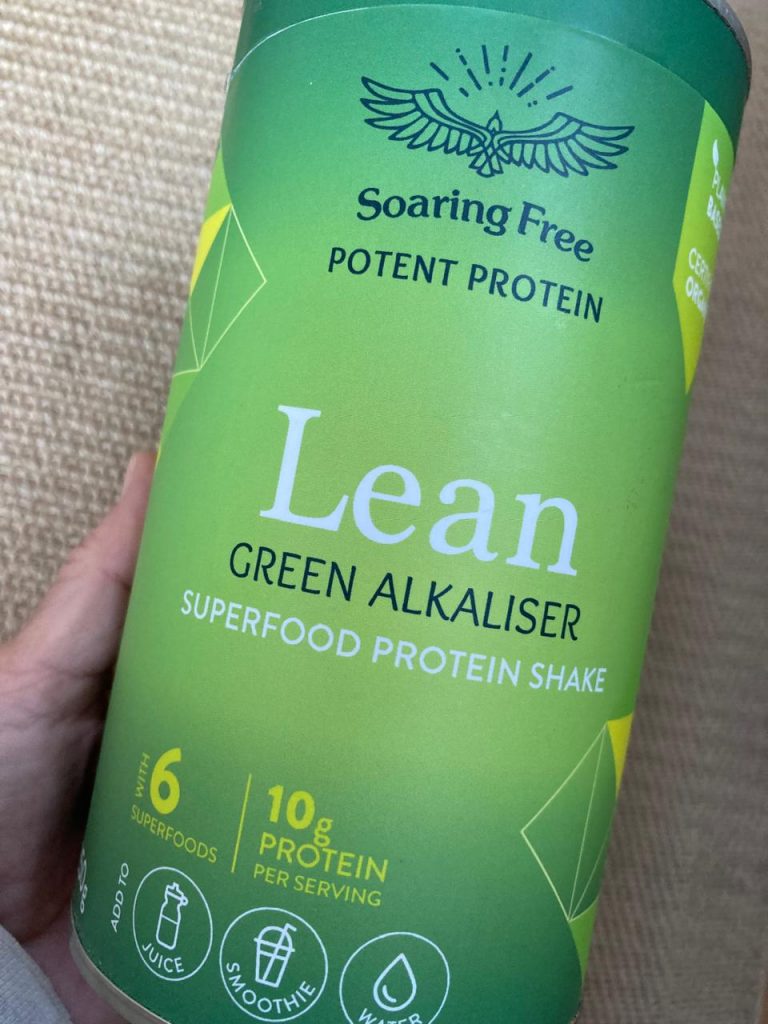
Days begin in the soft shuffle of headlamps and zips at 5:30am. Penelope with intention, steps into the dark, and walks toward sunrise. Eucalyptus breath drifts from wet groves; salt rides in from the Bay of Biscay; a bakery’s first loaves send warm air into the lane. Way-markers flash yellow; shells clack on backpacks; bells call from unseen chapels. Around 7am she pauses at a lookout to mix her plant-based superfoods—vital for a vegan in rural Spain—before walking on through quiet hours that invite conversation or silence.
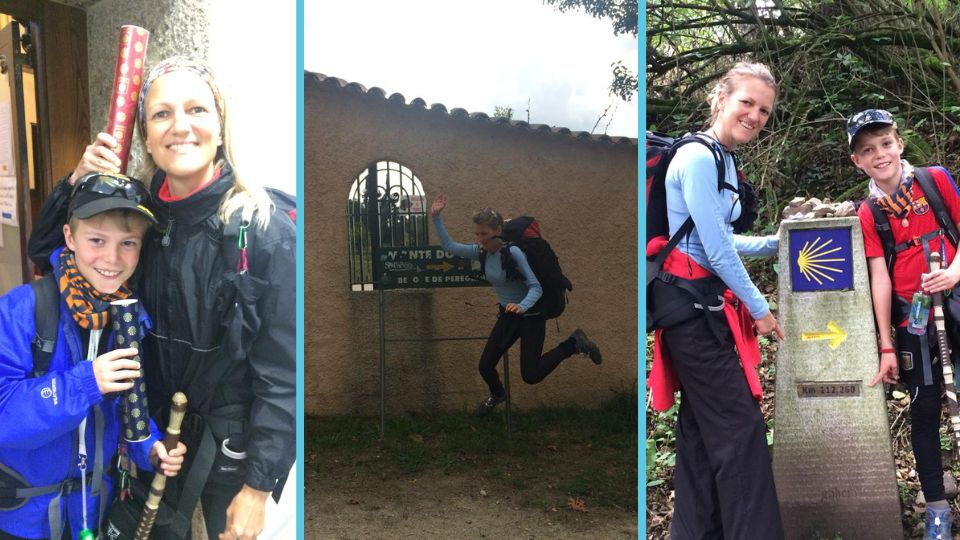
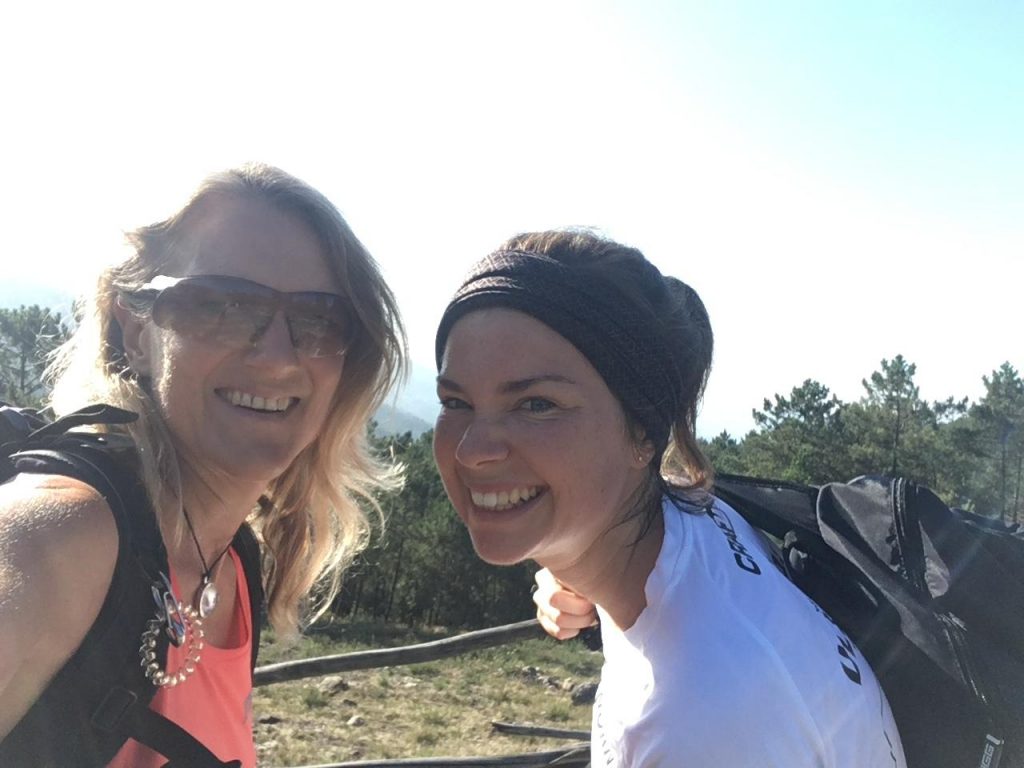
Some days are solitary; some are full of encounters. On her last Camino she met “Susie,” raw after a breakup and tangled in shame. They walked, rested, talked. Movement softened the edges; coaching gave language and tools. They still check in years later.
“Connection rewires shame,” Penelope says. “And walking makes truth easier to speak.”
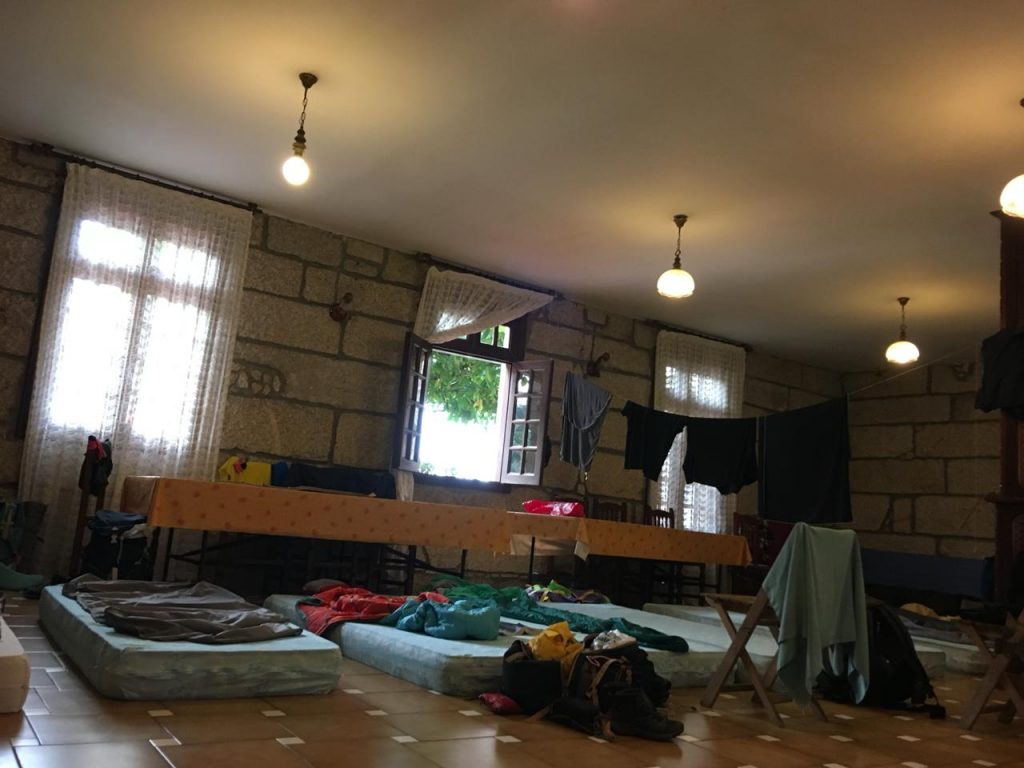
Afternoons end at an albergue—a simple pilgrim hostel—where stories braid over sinks and supper. She never imposes therapy; she offers it. A scan of the QR code sets up a few hours of walk-and-talk the next day, or a quiet craniosacral session for nervous-system regulation. Her pack stays as light as she can manage (about 20% of her body weight), feet are slathered each morning with shea butter and massaged at night with arnica oil, and boundaries hold firm so she can hold others. Short videos on Instagram and YouTube will share the road so supporters can see the work unfold in real time.
Read Penelope’s blog on Camino symbols and what they’ve mean to her here
The Night She Almost Quit
There was a day she pushed close to 50km, much of it uphill through dripping forest. Supplies ran low; her period began; the last 15km offered no water, no café, only mud and roots. By dusk she limped into a hilltop village, only to hear the words every pilgrim dreads: “We’re full.” She slid to the floor and wept—spent, shaking, empty. A caretaker crouched, helped her off with her shoes, found a shower and a cushion, then an extra mattress at the town hall for the night.
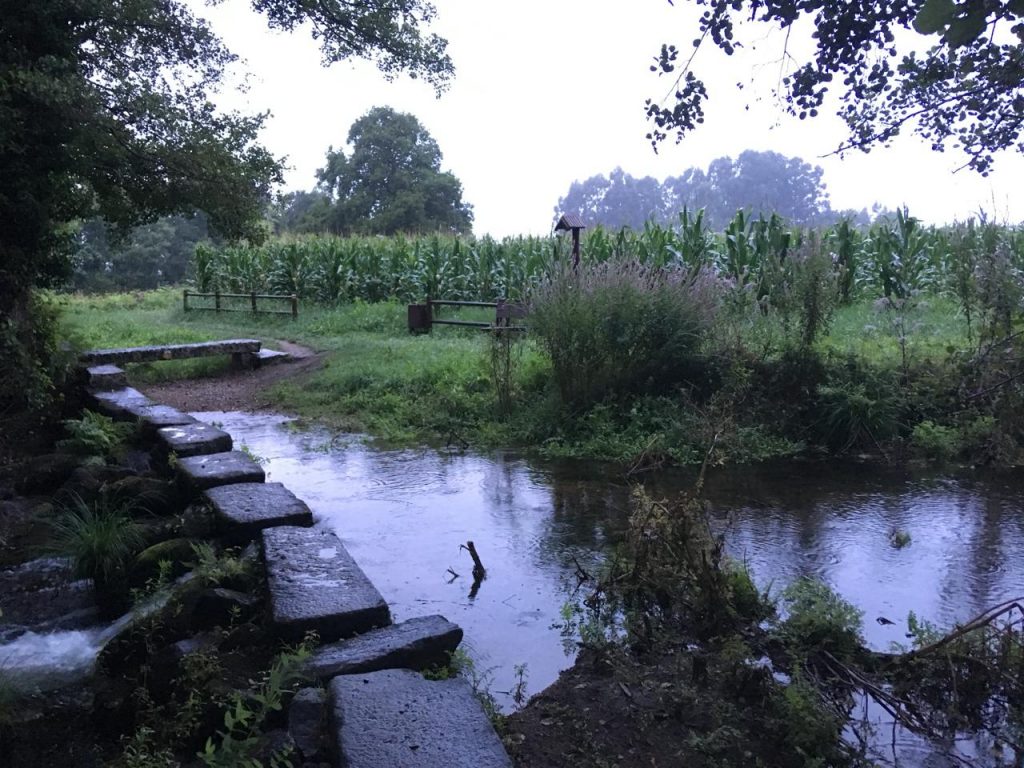
Ten hours of dreamless sleep later, Penelope stepped into a pearly rain, following a mossed aqueduct with strangers who had become a community of the trail. Giving up wasn’t an option; there was only forward. That night is why she trusts this path to hold people when their own strength is gone.
Who she is matters as much as what she’s studied (integral coaching, craniosacral therapy, meditation/yoga, wilderness guiding) or where she’s worked (investment banking and consulting, NGO social development, writing).
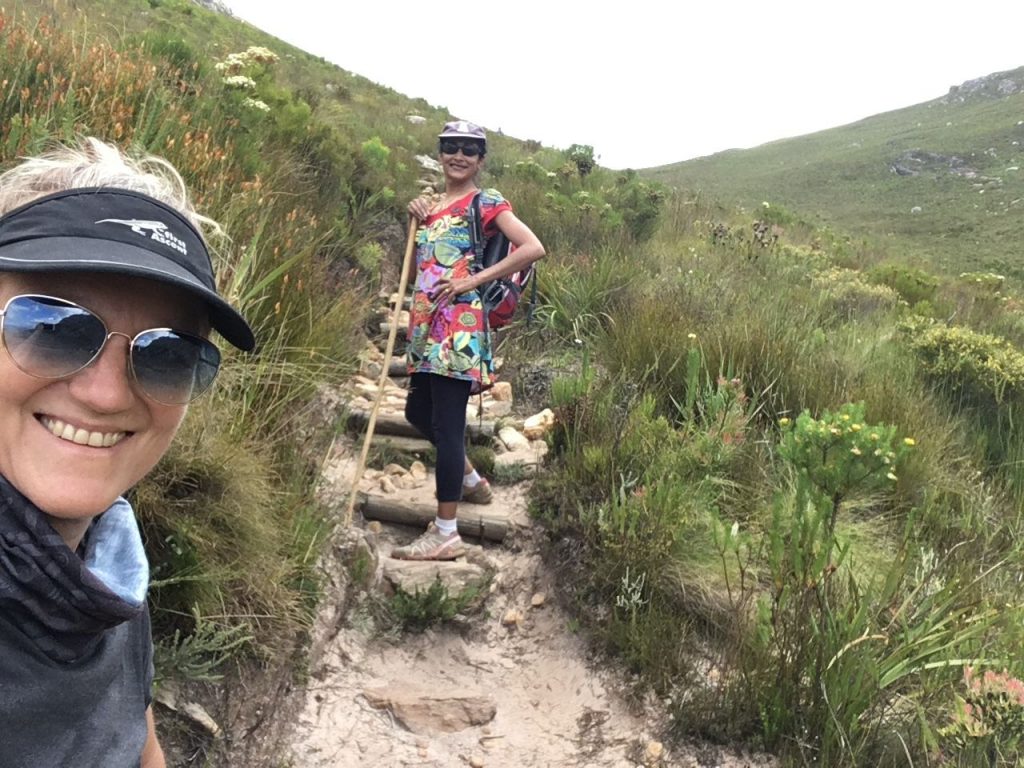
Penelope(left) guiding a small group on a hike
Those chapters expanded her view: trauma is trauma, whether you wear a suit or sleep rough. Her promise on this pilgrimage is to listen without fixing, to sit with the hard, to be the calm in someone else’s storm.
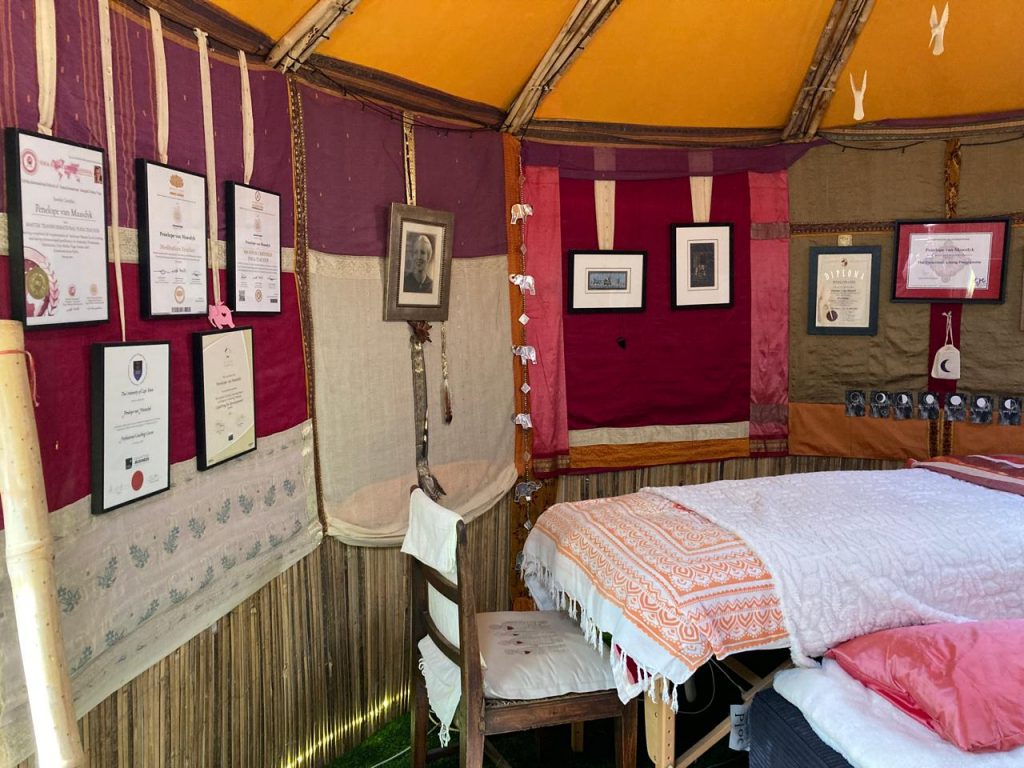
Penelope’s therapy room in my Hout Bay Garden surrounded my Milkwood trees, birds and squirrels
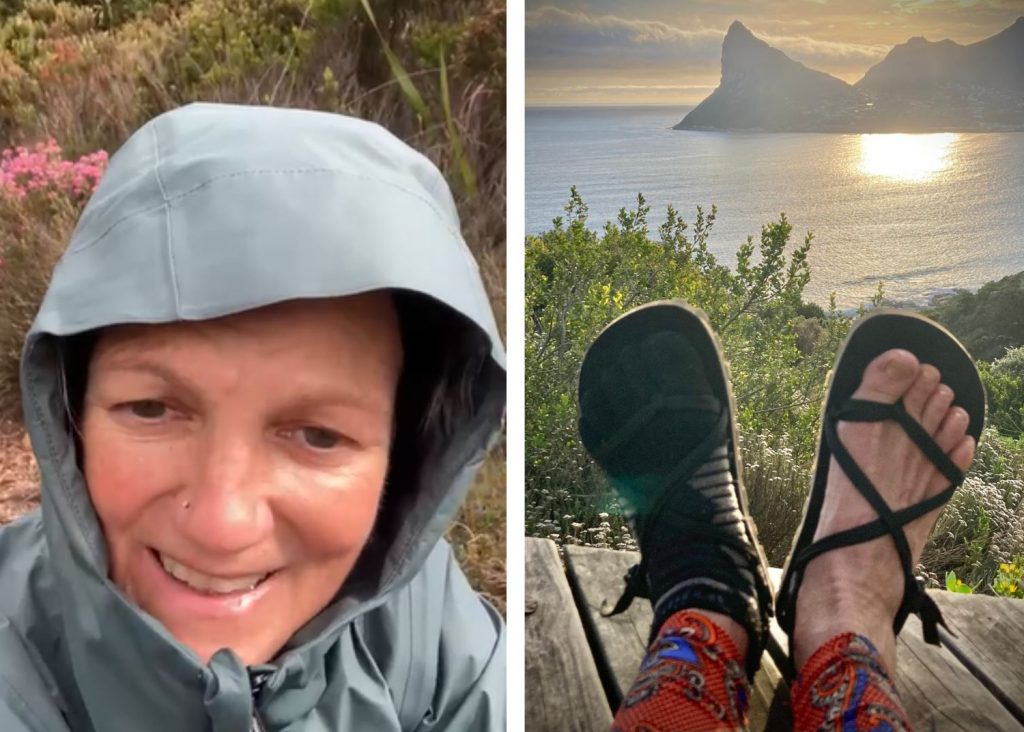
What your support makes possible: a transparent, modest budget—ZAR12,000 flights (already covered offline via therapy-voucher sales); ZAR8,000 gear (ZAR6,500 sponsored); ZAR5,000 internal travel; ZAR20,000 accommodation; ZAR10,000 food & sundries (including a ZAR400 boost from Soaring Free Superfoods). Shout-outs to the friends who funded her Patagonia waterproof jacket and T-Rockets hiking sandals, and to psychologist Rick Hanson, who gifted a course on grief and loss. Every rand buys a bed after 30–40km, a simple meal, a bus between trailheads, and the data so a struggling pilgrim can find her.
Penelope’s future dreams are big, and she plans to seed monthly Cape Town wellness walks, donation-based community hikes and corporate nature immersions that will subsidise at-risk youth programs—movement medicine for a city that needs it. If you or someone you love needs support today, please reach out to SADAG Suicide Crisis Helpline: 0800 567 567 (WhatsApp 076 882 2775 / 087 163 2030). You are not alone.
Call to action
To support Penelope van Maasdyk visit their BackaBuddy campaign link here
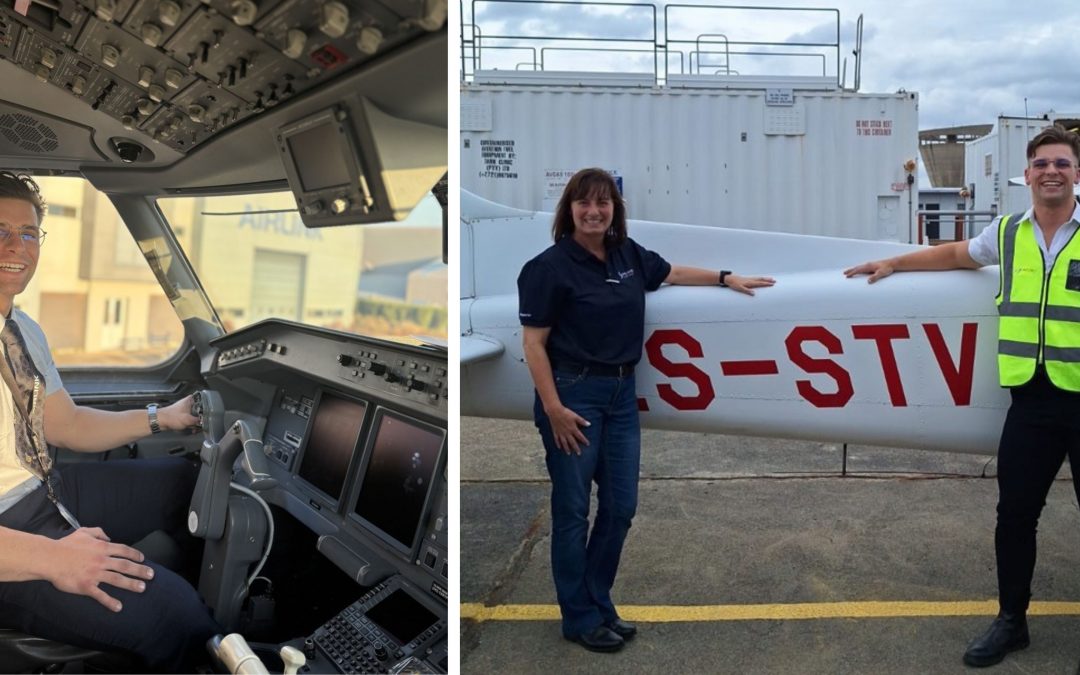
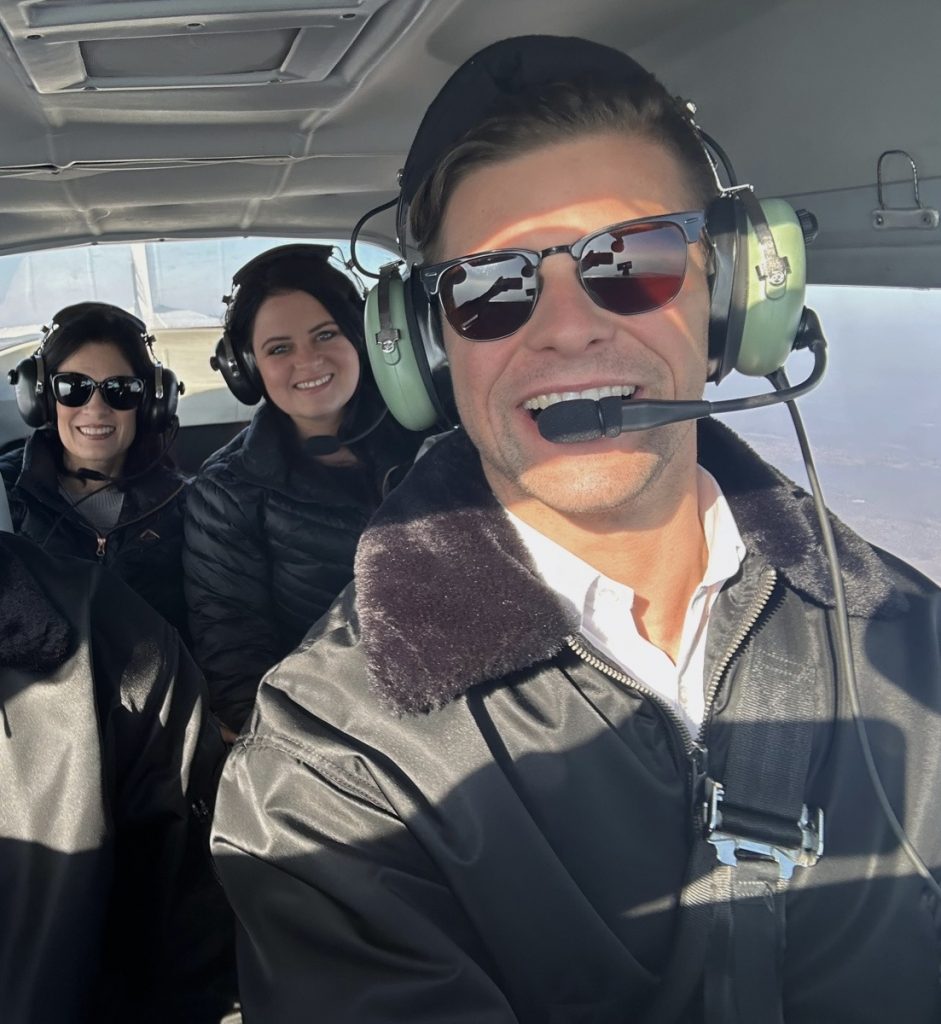
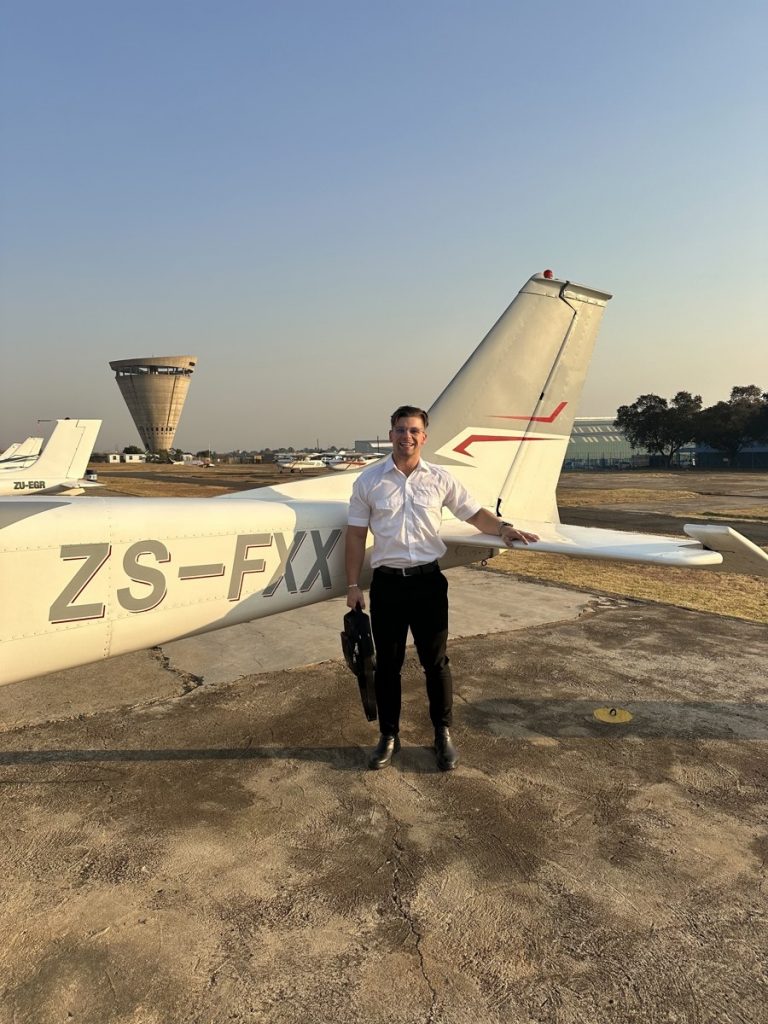
Matthew James Barrett (25) from Sunninghill, Johannesburg is just 13 flying hours away from completing his Private Pilot’s Licence (PPL) — the crucial milestone toward becoming a commercial pilot. A full-time cabin crew member and dedicated student pilot, Matthew has already logged 31 hours, made significant sacrifices, and kept his dream alive through years of disciplined effort. But while determination has carried him this far, the cost of training now threatens to keep his wings on the ground.
A dream rooted in his grandfather’s legacy and his mother’s sacrifices
Matthew’s love for aviation began with his grandfather, who served in the Air Force and later trained at Grand Central Airport — the same Midrand airfield where Matthew now flies.
“My passion for aviation was sparked by my grandpa,” he says. “He was in the Air Force and later did his PPL at Grand Central. As a kid, I remember going to the library with him, looking at books about planes, and listening to his stories. The moment I truly knew I wanted to fly was when I would spend time with him. Now, being based at the same airfield he flew from is incredibly special to me. I can’t wait to take him up for a flight once I’m done.”
From the outset, Matthew knew this journey would demand more than talent. He has worked full-time while studying, squeezing in flight hours between shifts and cutting expenses to the bone. He sold his car to reduce costs, lives on the bare minimum, and even uses gym reward points to help cover electricity at home. At 25, while many peers spend weekends unwinding, he trades leisure for the cockpit — one lesson at a time.
Behind him stands his mother, Joanne, who raised Matthew and his sister Tiffany as a single parent.
“From the moment Matthew was a little boy, he was a force of nature,” she says. “He was always kind, determined, and never gave up on what he wanted. I’ve seen him excel in sports, in CrossFit, and now in flying — he was born to fly. This dream is a family one. We’ve all made sacrifices to get him here, and I know he wants this not just for himself, but to give back to his family one day.”
A dream grounded by cost — and lifted again by community generosity
Flying is not only demanding; it’s expensive. Every hour in the training aircraft costs R3,500 plus a landing fee, and Matthew must still cover his remaining hours, exams, and final skills test. Beyond that, the cost of a Commercial Pilot’s Licence looms at close to R850,000 — a daunting number for a young man already stretched to his limits.
For many young people, the biggest barrier isn’t passion or ability; it’s funding.
“I applied for bursaries, reached out to companies, and tried every option,” Matthew says. “When nothing worked, I realised I couldn’t continue this journey alone. The support I’ve received so far has been truly inspiring and given me the hope and strength to carry on.”
Twelve days after launching his crowdfunding campaign, 31 donors have contributed more than R49,000 toward his R500,000 target.
Every contribution “literally translates into minutes in the air,” he says — covering outstanding flight hours, exam and licence fees, ground briefings, aircraft hire for the skills test, and transport to and from training.
For Matthew, crossing this finish line is about more than a licence. It honours his family’s sacrifices, carries his grandfather’s story forward, and opens the door to mentoring new pilots who don’t know where to begin.
And he has a message for every child who looks up at a passing plane and dreams of one day flying it: “There is no feeling more surreal than defying gravity and seeing the world from a different perspective. Feed that passion and never stop working and learning. You will have to make sacrifices, but in the end, it will all be worth it.”
With 13 hours to go, Matthew’s future in aviation now sits with the public to lift him higher — whether that’s a few minutes in the air or a full hour that gets him closer to the flight deck.