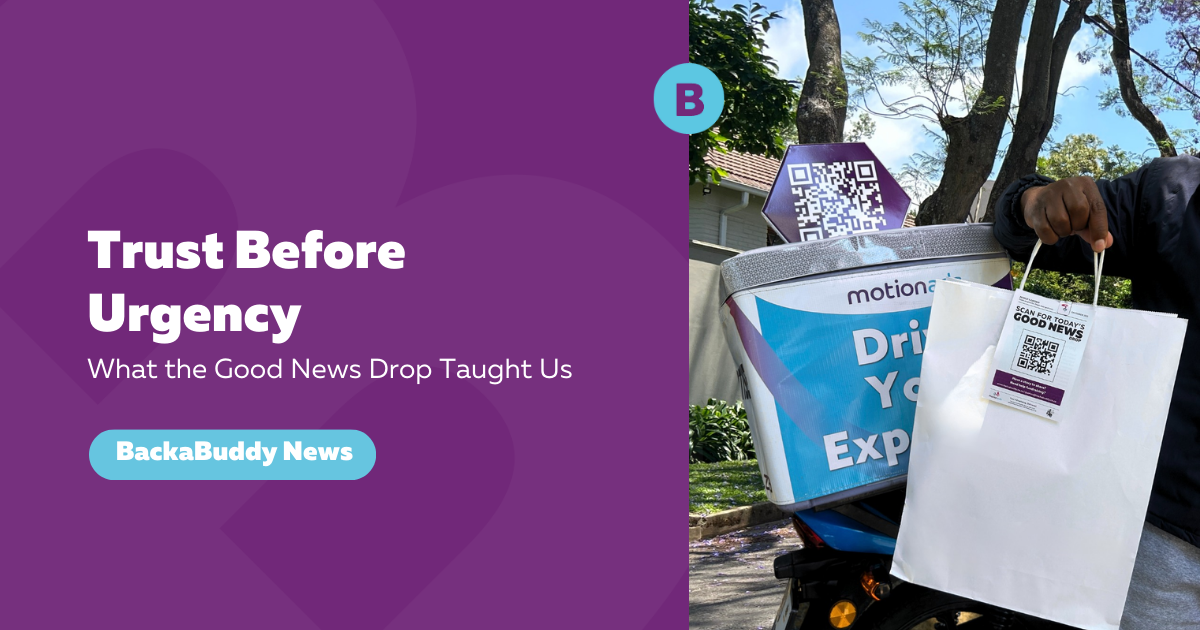
December is the noisiest month of the year. It’s also the month when trust matters most.
Looking back at December 2025, one thing became clear very quickly: when urgency rises, scepticism rises with it. Fundraising, marketing, and media all compete for attention, and audiences don’t automatically become more generous — they become more discerning.
The Good News Drop was never designed to cut through that noise with pressure or short-term tactics. It was designed to do something far more intentional: create the conditions where generosity feels safe, credible, and sustainable.
As a campaign, it offered valuable insight into how trust is built, how it behaves, and how it ultimately supports meaningful participation — especially in high-noise seasons.
Table of Contents
-
This Was Never About Fundraising First
-
Why MotionAds Played a Critical Role
-
Offline Doesn’t Convert — It Prepares
-
Why Platform Context Matters
-
Tipping Revealed the Trust Layer
-
How the Ecosystem Worked
-
What This Means Going Forward
-
A Final Reflection
This Was Never About Fundraising First
From the outset, the Good News Drop was positioned as a brand, trust, and behaviour-shaping initiative, not a transactional fundraising campaign.
Rather than leading with urgency, the campaign focused on:
- Daily positive stories
- Visible, real-world presence
- Recognition of generosity
- Small, repeatable moments of hope
The intent was simple: help people feel hopeful, not hurried.
That intent guided every decision — from creative direction to channel roles to how success was measured. The emphasis wasn’t on instant conversion, but on emotional safety, familiarity, and credibility during a time when people are often overwhelmed.
Browse the Good News Drop
Why MotionAds Played a Critical Role
The partnership with MotionAds was never about direct donation attribution. Its role was more strategic — and ultimately foundational.
MotionAds brought:
- Physical visibility
- Legitimacy
- Real-world proof of presence
Execution highlights included:
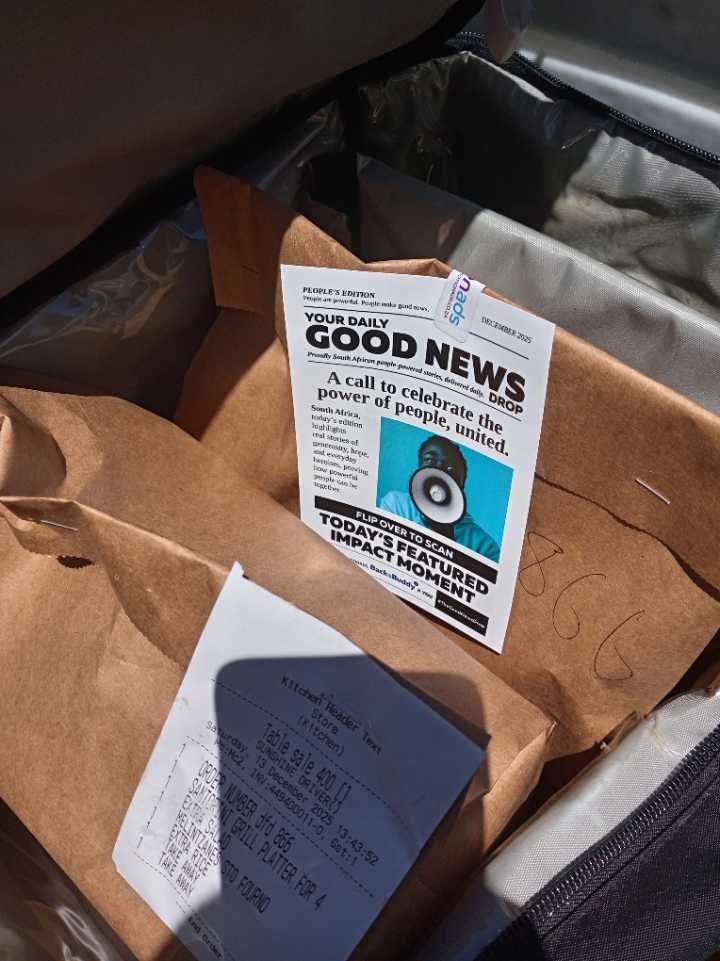
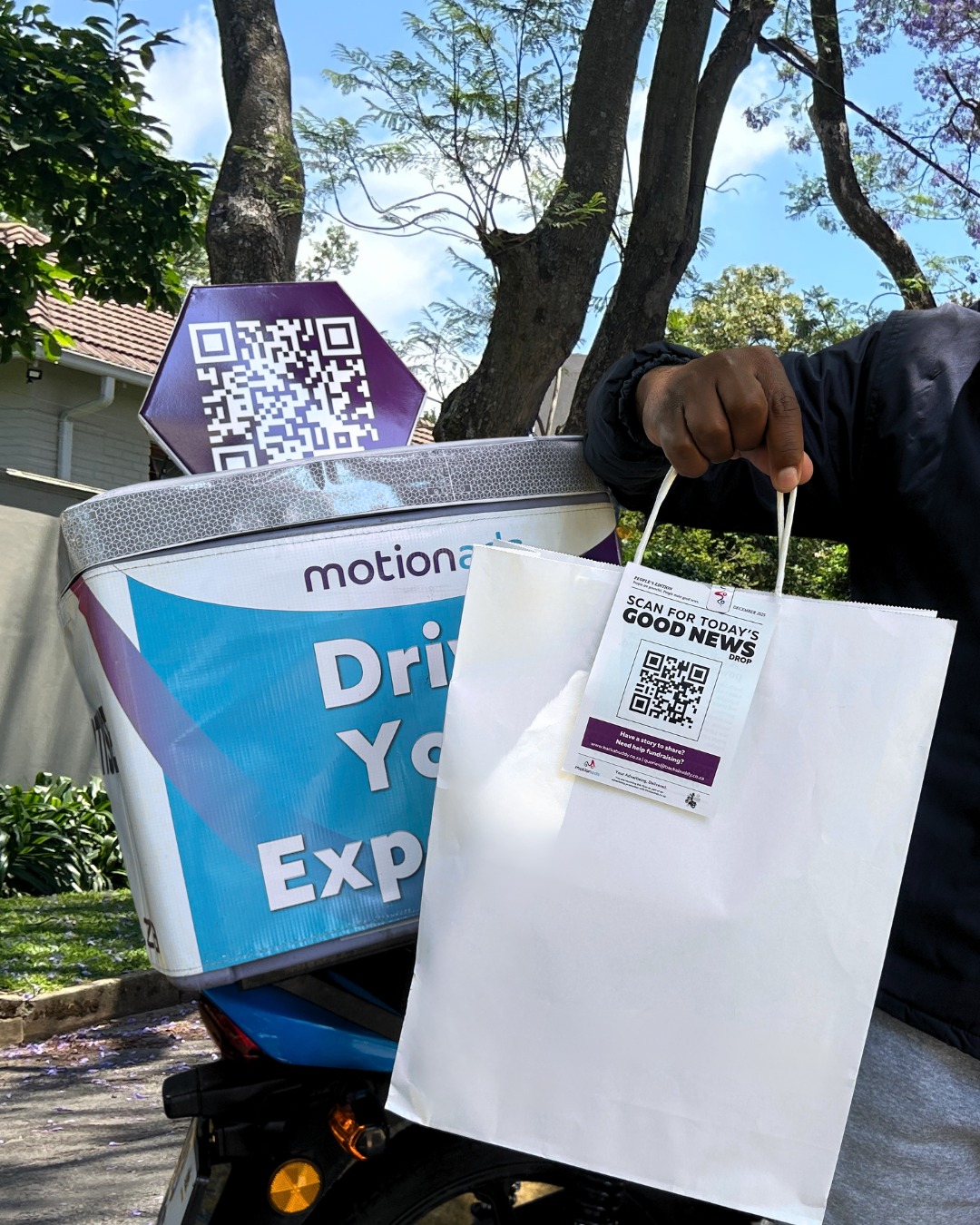
- 80 riders activated
- Approximately 20,000 flyers distributed via Uber Eats deliveries
- QR codes linking to the Good News Drop hub
- Full geo- and time-stamped photo assurance
This physical layer functioned as a trust transfer mechanism. In a season of heightened scepticism, seeing the campaign in the real world reinforced authenticity in a way digital-only exposure often cannot.
Offline Doesn’t Convert — It Prepares
QR performance is often misunderstood, so it’s worth addressing clearly.
- Total QR scans: 159
- This is not a failure metric
- It is a signal of brand recall and confidence
What the data showed:
- Social media drove the majority of traffic and engagement
- QR codes acted as an assist channel
- Physical presence increased confidence and memory, not impulse behaviour
This aligns with well-documented behaviour patterns: trust is often built offline, while conversion happens later — digitally and asynchronously.

Why Platform Context Matters
During the Good News Drop period, December 2025 became one of BackaBuddy’s strongest months on record:
- R17.02 million donated
- Average of R549,164 per day
- 9 days exceeding R700,000
- 17,480 donors
- 39% year-on-year growth
What’s important here is not just the growth — but how it happened.
The increase came from more people giving, not larger individual donations. This points to inclusion, emotional safety, and trust — not extraction.
Tipping Revealed the Trust Layer
One of the most reliable indicators of platform trust is tipping behaviour.
December showed:
- 73% of donors chose to tip
- 15,778 tips received
- Average tip of R61
- Tip margin of 5.4%
Optional tipping only works when people trust the system they’re participating in. These numbers reinforced what the campaign was designed to do: strengthen confidence, not apply pressure.
How the Ecosystem Worked
The Good News Drop worked because each channel played a distinct role:
- MotionAds reinforced legitimacy and real-world presence
- Social media delivered reach, engagement, and repeat exposure
- PR ensured narrative consistency and partner credibility
Social performance highlights included:
- Facebook: 180,000 views
- Instagram: strong month-on-month uplift
- LinkedIn: high credibility and partner engagement
- TikTok: 79,000 views and over 2,400 new followers
Short-form, emotionally resonant content performed best — amplified by the credibility halo created through physical presence.
What This Means Going Forward
The Good News Drop validated a core insight that will continue to shape how we think about partnerships:
Trust precedes conversion — every time.
What worked:
- Emotion before urgency
- Recognition over pressure
- Physical presence as a trust signal
- Social as the primary conversion engin
What this opens up:
- Clearer offline success metrics from the outset
- Stronger post-exposure retargeting strategies
- Deeper storytelling integration across physical channels
- Lifecycle systems that convert trust into long-term participation
A Final Reflection
The Good News Drop wasn’t about raising money. It was about strengthening the conditions under which generosity happens.
For corporates and partners exploring purpose-led visibility, ESG-aligned storytelling, and brand-safe impact, this campaign offered a practical, real-world example of what becomes possible when trust is intentionally designed — not assumed.
As we move into a new year, that lesson feels more relevant than ever.