On International Wheelchair Day, 6-year-old Elijah received something life-changing.
Not just a wheelchair.
Freedom.
After outgrowing his old chair, Elijah’s family turned to their community to help fund a lightweight, custom-fit wheelchair designed specifically for his growing body and active spirit. Within weeks, donors came together to raise over R40,000 — ensuring that Elijah could return to school safely, move confidently, and keep up with the speed he loves so much.
But Elijah’s story highlights something many people don’t realise:
Not all wheelchairs are created equal.
And for children especially, the right chair is not a luxury — it’s a necessity.
Why a “Standard” Wheelchair Often Isn’t Enough for a Child
It’s easy to assume that any wheelchair will do the job.
But paediatric wheelchairs are fundamentally different from generic or hospital-issued chairs.
Children are still growing. Their bodies change rapidly. Their posture, spine alignment, muscle tone, and balance all require careful support.
A poorly fitted wheelchair can:
-
Cause long-term spinal damage
-
Create pressure sores
-
Limit independence
-
Increase risk of tipping or injury
-
Restrict participation in school and sport
-
Lead to secondary health complications
Elijah’s previous chair was heavy, unstable, and unsafe at speed — and for a six-year-old who loves independence, that matters.
A custom or lightweight paediatric wheelchair is designed to:
-
Match the child’s exact measurements
-
Offer better balance and centre of gravity
-
Support posture and muscle development
-
Allow safe mobility at school and outdoors
-
Grow or adjust with the child
For children, mobility is development.
Mobility is confidence.
Mobility is participation.
Environmental Barriers Matter Too
Elijah’s story isn’t unique.
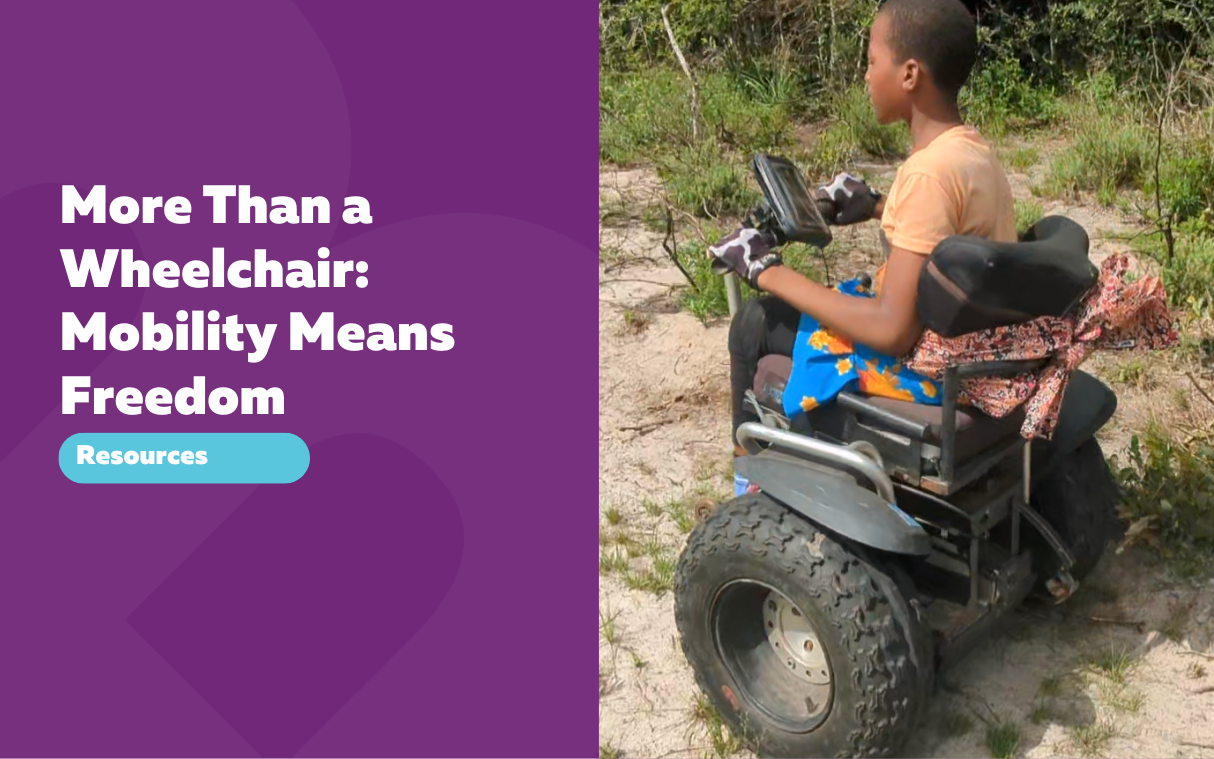
Earlier this year, Sikholelwe’s campaign — Keep Her in School: The Segway Challenge — showed another side of the same issue.
Living in a rural area with thick beach sand and no accessible transport, Sikholelwe’s standard wheelchair simply couldn’t cope. Her mother carried her 3km to school daily. Without a solution, she risked dropping out entirely.
The answer wasn’t just “a wheelchair.”
It was an adapted Segway mobility solution, custom-built through AddMobility in the UK — a device capable of navigating sand, rural terrain, and long distances independently.
Her campaign raised over R161,000 to secure that life-changing equipment.
These stories show that mobility needs are not one-size-fits-all.
Environment matters.
Terrain matters.
Growth matters.
Safety matters.
And sometimes the right solution costs more upfront — but saves years of limitation.
Why Paediatric & Custom Wheelchairs Cost More
Custom or adapted chairs often include:
-
Lightweight aluminium or titanium frames
-
Custom seating systems
-
Adjustable growth features
-
Postural support cushions
-
Anti-tip safety mechanisms
-
Specialist wheels for terrain
-
Imported parts
In South Africa, public healthcare often cannot cover these specialised options. Medical aids may only partially fund them — leaving families to bridge the gap.
That gap can feel overwhelming.
But it’s not impossible.
Where to Find Paediatric or Custom Wheelchairs in South Africa
If you’re researching mobility options, here are helpful starting points:
Local & International Suppliers
-
Shonaquip Social Enterprise (SA) – Specialists in posture-support wheelchairs for children
-
CE Mobility (SA) – Distributors of customised and lightweight mobility equipment
-
Consolidated Mobility (SA) – Paediatric and complex rehab mobility solutions
-
AddMobility (UK) – Custom-built mobility systems (including Sikholelwe’s adapted Segway chair)
Nonprofit Support Organisations
-
QuadPara Association of South Africa (QASA)
-
CHOC Childhood Cancer Foundation (if linked to oncology cases)
-
Shonaquip Foundation outreach programmes
Always consult with:
-
An occupational therapist
-
A rehabilitation specialist
-
A paediatric physiotherapist
Proper assessment ensures the right fit.
How to Raise Funds for a Wheelchair on BackaBuddy
Wheelchair campaigns perform particularly well on BackaBuddy because:
-
The need is clear
-
The outcome is tangible
-
Donors understand the impact
Here’s how to approach it:
1. Explain Why the Current Chair Isn’t Suitable
Be specific. Growth? Terrain? Safety? Posture?
2. Break Down the Costs
-
Base chair price
-
Custom seating adjustments
-
Import or shipping fees
-
Therapy assessments
Transparency builds trust.
3. Share Photos or Video
Show the current limitations. Show the child’s personality. Let donors see who they’re supporting.
4. Highlight Independence, Not Limitation
Elijah’s campaign wasn’t about disability — it was about freedom and independence.
That shift matters.
5. Share Milestones
-
25% funded
-
Order placed
-
Chair received
-
First day back at school
Updates keep momentum alive.
More Than Mobility
When Elijah received his new wheelchair on International Wheelchair Day, it wasn’t just symbolic.
It was transformative.
And when Sikholelwe gained access to terrain that once excluded her, it wasn’t just transport.
It was access to education.
The right wheelchair:
-
Keeps children in school
-
Prevents secondary medical complications
-
Reduces caregiver strain
-
Builds independence
-
Protects dignity
-
Opens opportunity
Mobility is not about equipment.
It’s about access.
Final Thought
If your child — or someone in your community — needs a specialised wheelchair, know this:
You are not alone.
Thousands of South Africans have rallied behind mobility campaigns on BackaBuddy, proving that when the need is clear and the impact is visible, people respond.
Because every child deserves a chair that keeps up with their spirit.