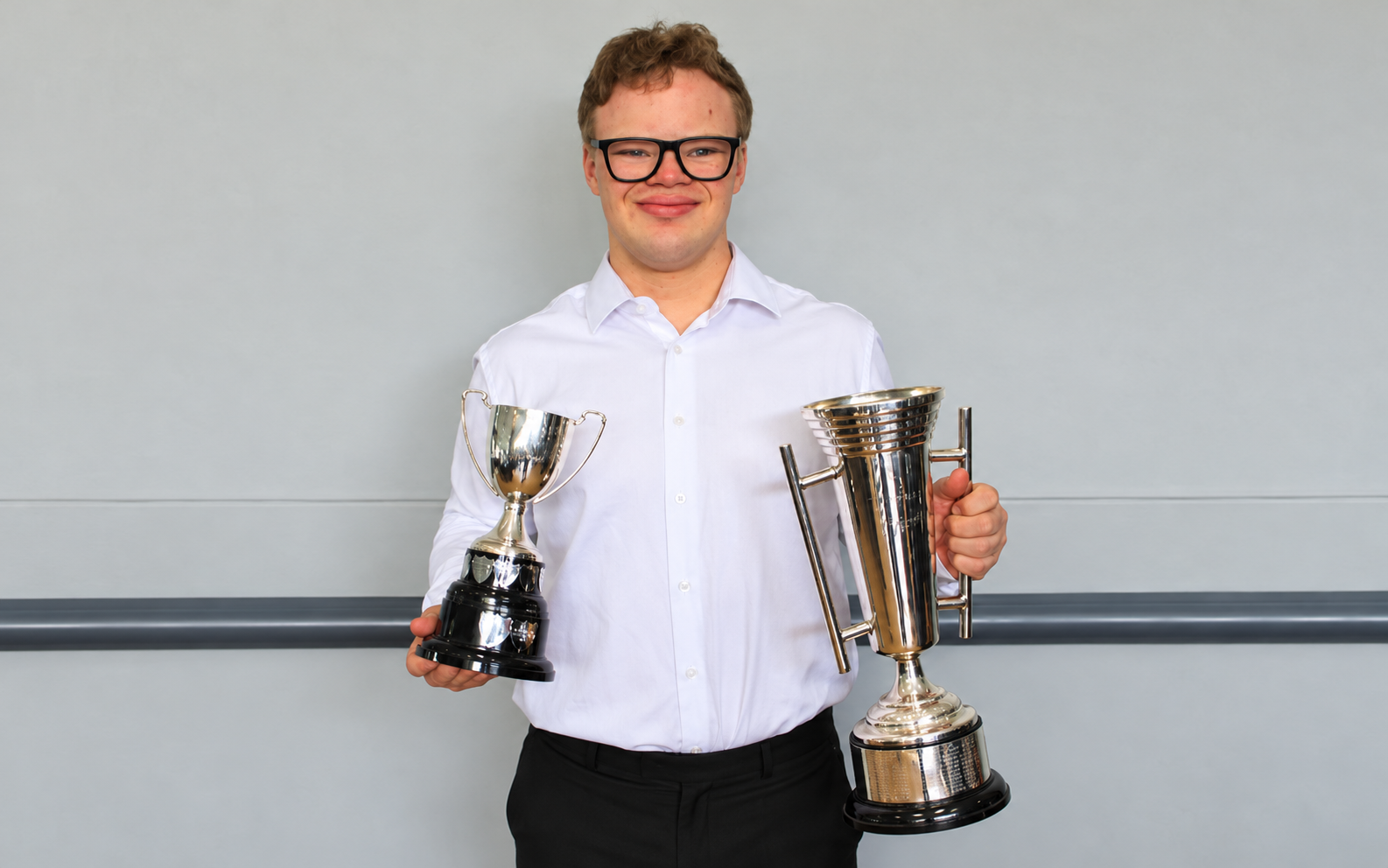
Johannesburg, South Africa — After more than a decade in the pool and five years of increasingly serious competitive training, 21-year-old Johannesburg swimmer Lorenzo Cazzavillan has qualified to compete at the 12th World Down Syndrome Swimming Championships in Albufeira, Portugal, from 30 October to 7 November 2026.
Lorenzo has Down syndrome and will travel as part of a South African team entered through DISO South Africa.
A BackaBuddy campaign, Lorenzo 12th World Down Syndrome Championship, has been launched to raise R150,000 towards the cost of getting him to Portugal.
For his father, Max Cazzavillan, one point matters above all others.
Lorenzo did not receive a courtesy invitation. He earned his place.
“He’s got three qualifying A times and one qualifying B time,” Max says. “He’s put a lot of work into it, and I think he’s reaping the rewards.”
From learning to swim to qualifying for the world stage
Lorenzo’s relationship with swimming began when he was very young.
Max first took him to swimming lessons so that he would be safe around water. Later, at Casa do Sol School for Special Education, swimming formed part of the school programme and a teacher noticed how much he enjoyed it.
When Lorenzo was around nine or ten years old, the family was encouraged to take his swimming beyond school.
The shift into competitive swimming came later when Lorenzo moved into the Mandeville Dolphins environment, where his training became more structured and he became part of a squad.
Over the past five years, Max says the progress has been significant.
Lorenzo began competing more seriously, represented Gauteng at SASA II/DS events and gradually improved his times to the point where he met the qualification standards for the World Championships.
“I’m very proud of him,” Max says. “He’s the one that’s put the work in. Yes, I’ve taken him to training and changed certain things to help him improve, but at the end of the day, he’s put the work in.”
Recent performances show the work is paying off
Lorenzo’s qualification follows a run of strong performances.
Over the past three years, he has represented Gauteng at the SASA II/DS National Games and has earned multiple medals across different events.
More recently, he won silver in the 100m at the Special Olympics National Games.
He also competed at the South African Short Course Championships in Pietermaritzburg, swimming in the multi-class category against some of the country’s top swimmers.
Max says Lorenzo recorded his fastest 100m freestyle time at that event.
“To watch him achieve the times that he achieved shows that the training is starting to pay off,” Max says. “What he’s putting in at training is now translating into success at big events.”
A world championship — but no automatic funding
Although Lorenzo has qualified for the World Championships, the trip is not funded.
Max says the South African team travelling to Portugal has not been endorsed by Swimming South Africa or SASCOC, meaning the athletes are not receiving official national colours or automatic financial backing.
Lorenzo is instead travelling through DISO South Africa, which is sending a team to the championships.
For Max, that distinction has been difficult.
“He’s got three qualifying A times, and it’s not easy for him to get to those times,” he says. “He consistently swims under those A qualifying times, yet we cannot get the team endorsed.”
The costs add up quickly.
Flights, accommodation, competition fees, travel and specialised racing gear all need to be covered by the family.
Max says even an entry-level racing suit can cost around R6,500, which is why he has also approached individuals and brands for practical sponsorship support.
More than a swimming trip
Portugal will also be Lorenzo’s first trip overseas.
He has flown domestically before, but has never travelled to another country.
For Max, that makes the opportunity about much more than race times.
“I think for Lorenzo it’s an opportunity to grow,” he says. “It’s going to be his first overseas trip. He’s never experienced the culture of another country, and he’s never had the opportunity to spend time with Down syndrome athletes from all over the world.”
The athletes will stay together in a dedicated village environment throughout the championships.
Max hopes Lorenzo will use the experience to learn from other swimmers, make friends and come home with a stronger sense of what is possible.
“It’s like a massive family,” he says. “We’re going to be there for eight days with people connected through Down syndrome and sport.”
The people behind him
More than 50 people have already supported Lorenzo’s campaign, including members of Max’s running club, parents from Mandeville Dolphins and people Lorenzo has met through competitions.
Max says the response has been deeply humbling.
“There are people who know him, people who don’t know him very well but have met him, and people who know of him through other people who have contributed,” he says. “It makes you realise there are really, really good people out there.”
He says that support gives Lorenzo another reason to make the most of the opportunity.
“He carries all those people on his shoulders because of the contributions they’ve made,” Max says. “You want him to go there, really shine, embrace the environment and learn from the other swimmers.”
A bigger issue for para and Down syndrome sport
For Max, Lorenzo’s campaign has also highlighted how difficult it can be for athletes outside mainstream sporting structures to fund international competition.
He says athletes with Down syndrome often put in the same hours and discipline as other elite swimmers, but their achievements can be misunderstood or overlooked.
“I get the feeling a lot of people think he was invited,” Max says. “They don’t realise he qualified. For him to get to those times, it’s taken him five years.”
That is part of why he believes crowdfunding matters.
“I think crowdfunding is massive in helping sports that are not recognised or are not mainstream, so these athletes can realise their dreams as well,” he says.
Max hopes Lorenzo’s journey can also encourage other parents of children with Down syndrome to pursue opportunities in sport.
“Just because your child has Down syndrome doesn’t mean they can’t achieve,” he says. “There are avenues for them to be recognised for their talent.”
For Lorenzo, the next milestone is clear.
He has done the training.
He has achieved the qualifying times.
He has earned his place.
Now the remaining challenge is raising enough money to get him to the starting block in Portugal.
To support Lorenzo 12th World Down Syndrome Championship, visit the campaign page.