A Matric Ball is so much more than just a high school dance. Ask any South African matric student, and they will tell you; it’s the grand milestone you look forward to from the very moment you first put on a high school uniform. It represents the culmination of twelve years of early morning alarms, late-night studying, exam stress, personal growth, and friendships forged in the classroom and beyond. It is a night to look back on how far you have come, celebrate your achievements, and step confidently toward the future.
But for many families across South Africa, the excitement of this rite of passage can quickly become stressful when costs start adding up. Between finding the perfect matric farewell dress or renting a suit, paying for hair, makeup, shoes, photography, transport, and event tickets, the total can feel overwhelming. When budgets are already stretched, these additional expenses can place significant pressure on households.
Crowdfunding for Your Matric Ball on BackaBuddy
At BackaBuddy, we often hear from students who are considering skipping their farewell because they don’t want to place additional financial strain on their families. We believe that every student deserves the opportunity to celebrate their hard work alongside their classmates, regardless of their financial circumstances. Your matric year should be filled with excitement and anticipation, not worry about being left out.
Crowdfunding is a great solution because it gives your community the opportunity to support an important milestone in your life. Whether it’s family members, friends, teachers, neighbours, or people who simply want to help a young person reach a meaningful goal, crowdfunding can make your matric celebration more accessible.
If you are looking for ways to make your special night a reality, this step-by-step guide to fundraising for your matric ball through BackaBuddy will help.
Lay Out Your Budget with Honesty and Transparency
When people visit your fundraising page, they want to understand exactly what you are raising funds for. Transparency helps build trust and allows supporters to see how their contributions will make a difference.
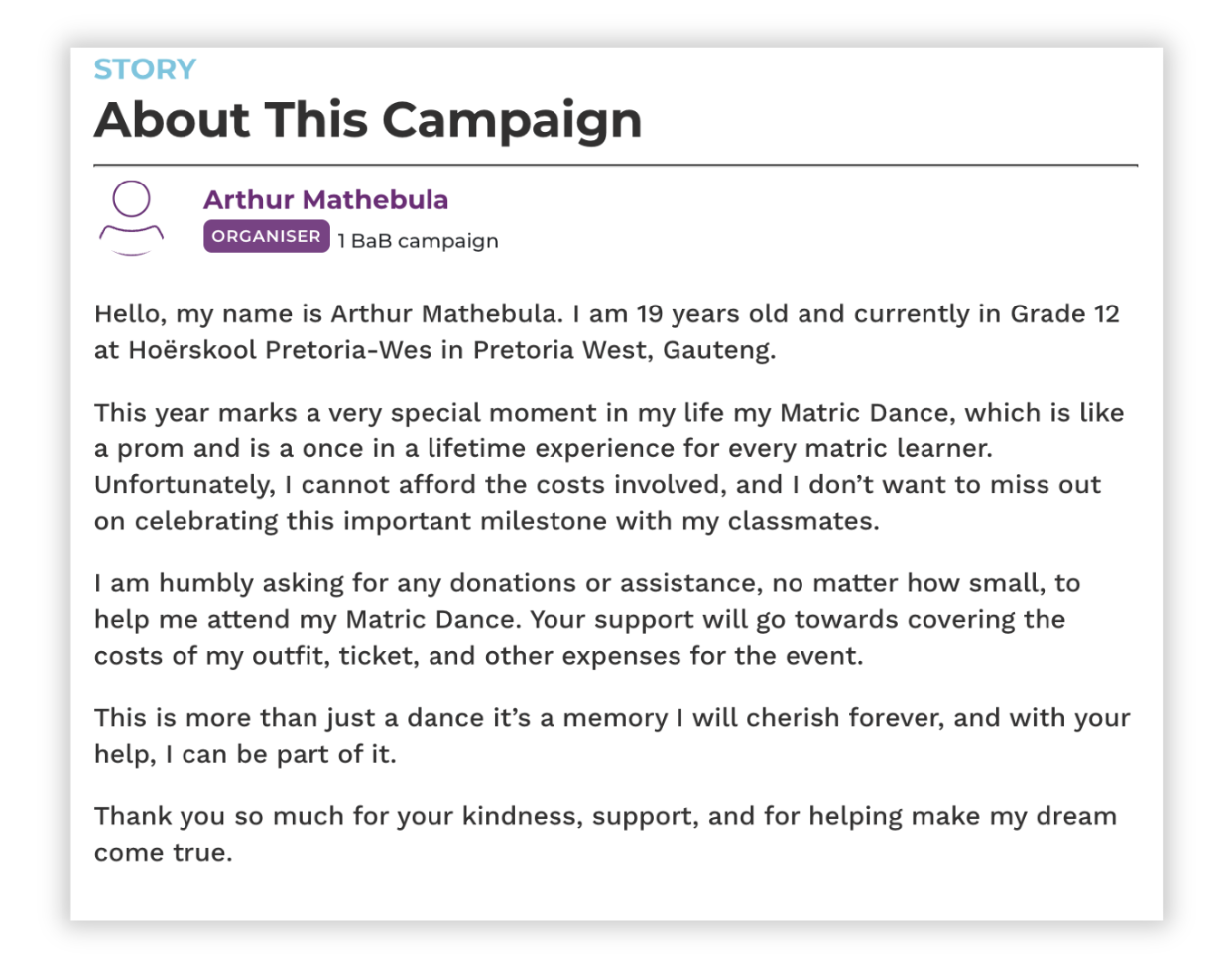
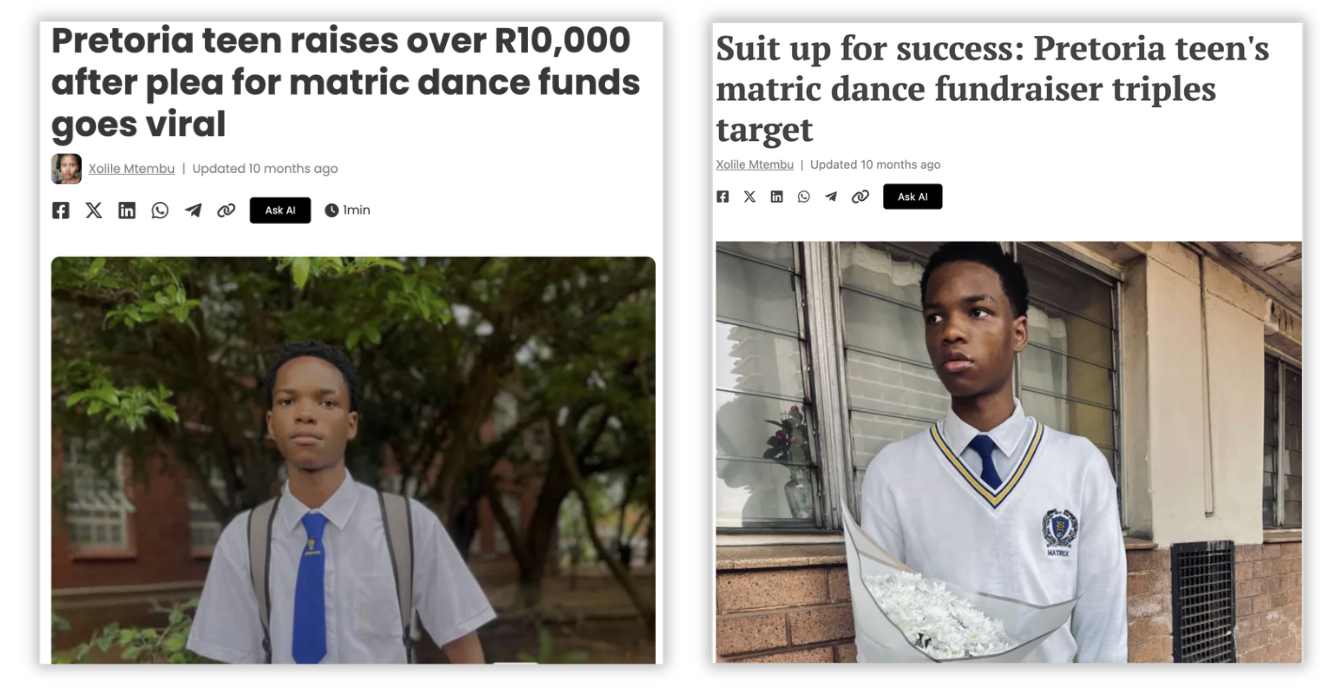
👉 Arthur’s matric ball campaign is a wonderful example of how an authentic, heartfelt story is sometimes all you need to move an entire nation.
Take some time to list every expense you need help covering. Rather than setting a target amount with no explanation, break your budget down clearly on your BackaBuddy page:
The Ticket: For many matriculants, covering the ticket cost is the biggest hurdle and the first step toward attending the event.
The Outfit: Whether you need help funding a matric farewell dress, renting a suit, purchasing shoes, or covering alterations, include those costs.
The Final Touches: Hair styling, makeup, or grooming can help students feel confident and ready for their big night.
Safe Transport: Arriving safely at and from the venue is important. Include transport costs if needed.
Capturing the Memories: Professional photos or photography packages can provide lasting keepsakes for you and your family.
Breaking your budget into smaller categories also helps donors understand the impact of their contribution. One supporter may choose to cover your ticket, while another might help pay for transport or styling. Every contribution moves you closer to your goal.
📍A Note for Parents and Donors: One of the best things about using BackaBuddy is safety and accountability. When you raise funds here, payouts can be made directly to the school for tickets or directly to service providers like the dressmaker, tailor, or transport company. This gives your donors complete peace of mind, knowing their hard-earned money is going exactly where it is needed most.
Tell Your Story
The most successful crowdfunding campaigns are built on genuine human connection. People connect with stories, goals, and experiences, not just fundraising targets.
When writing your campaign story, focus on being authentic. Share the parts of your journey that make your story unique.
Celebrate Your Journey
Tell people a little about yourself and your school experience. What subjects do you enjoy? Have you participated in sports, cultural activities, leadership programmes, or community initiatives? What are your plans after matric? Giving supporters a glimpse into your ambitions helps them understand who they are supporting.
Be Honest About the Challenge
Many South African families are facing financial pressures, and there is no shame in acknowledging that reality. Being open about your situation helps potential supporters understand why this milestone matters and how their contribution can make a difference.
Share Why It Matters
Explain what attending your matric ball means to you personally. Perhaps it is a chance to celebrate with lifelong friends before everyone takes different paths. Maybe it is an opportunity to create special memories with your family or mark the end of an important chapter in your life. When people understand the meaning behind your goal, they are more likely to feel connected to your journey.
💡 BackaBuddy Tip: A bright, clear photo can help potential supporters connect with your story. A school photo or an image that reflects your personality often works well and helps build trust with visitors to your campaign page.
Activate Your Circles
One common misconception is that a campaign will automatically gain attention once it goes live. In reality, successful fundraising usually begins with the people who know and care about you most.
Start with Your Inner Circle
Before sharing your campaign publicly, reach out to close family members, friends, teachers, and trusted community members. Even small early donations can help build momentum and encourage others to contribute. Campaigns that receive donations and shares within the first few days often gain traction more quickly, which is why starting with your immediate network can be so valuable.
Share on Social Media
Once your campaign has some initial support, start sharing it on WhatsApp, Facebook, Instagram, TikTok, and other platforms. Consider creative ways to tell your story. For example, you could share a photo from your first day of school alongside a current photo in your matric uniform, showing how far you have come since Grade 1.
Community groups, school alumni pages, local organisations, and neighbourhood forums can all help extend the reach of your campaign. You never know when a former student, local business owner, or community member may be looking for an opportunity to support a young person in their area.
Always include a simple call to action: “If you’re unable to donate, please consider sharing my campaign with your network.” A share can often be just as valuable as a donation.
✨ Try the #RoadToMatricBall Challenge: Don’t just post a link; create a quick video or photo reel for TikTok or Instagram! Share a compilation of your high school memories, study sessions, or a fun clip with your classmates, and overlay the text: 12 years of school down, 1 final hurdle to go! Help me get to my Matric Ball 🎓✨ Link in bio! This makes your campaign interactive, human, and incredibly easy for your peers to share.
Keep Your Supporters Updated
When someone contributes to your campaign, they become part of your journey. Regular updates help supporters stay engaged and allow them to celebrate your progress alongside you.
Consider sharing updates such as:
Reaching a fundraising milestone.
Purchasing your matric ball ticket.
Shopping for your outfit.
Getting closer to your goal as the event approaches.
For example:
“We’ve reached 40% of our target! Thank you to everyone who has supported and shared my campaign.” Or: “Thanks to your generosity, I’ve been able to secure my matric ball ticket. I’m incredibly grateful for the support.”
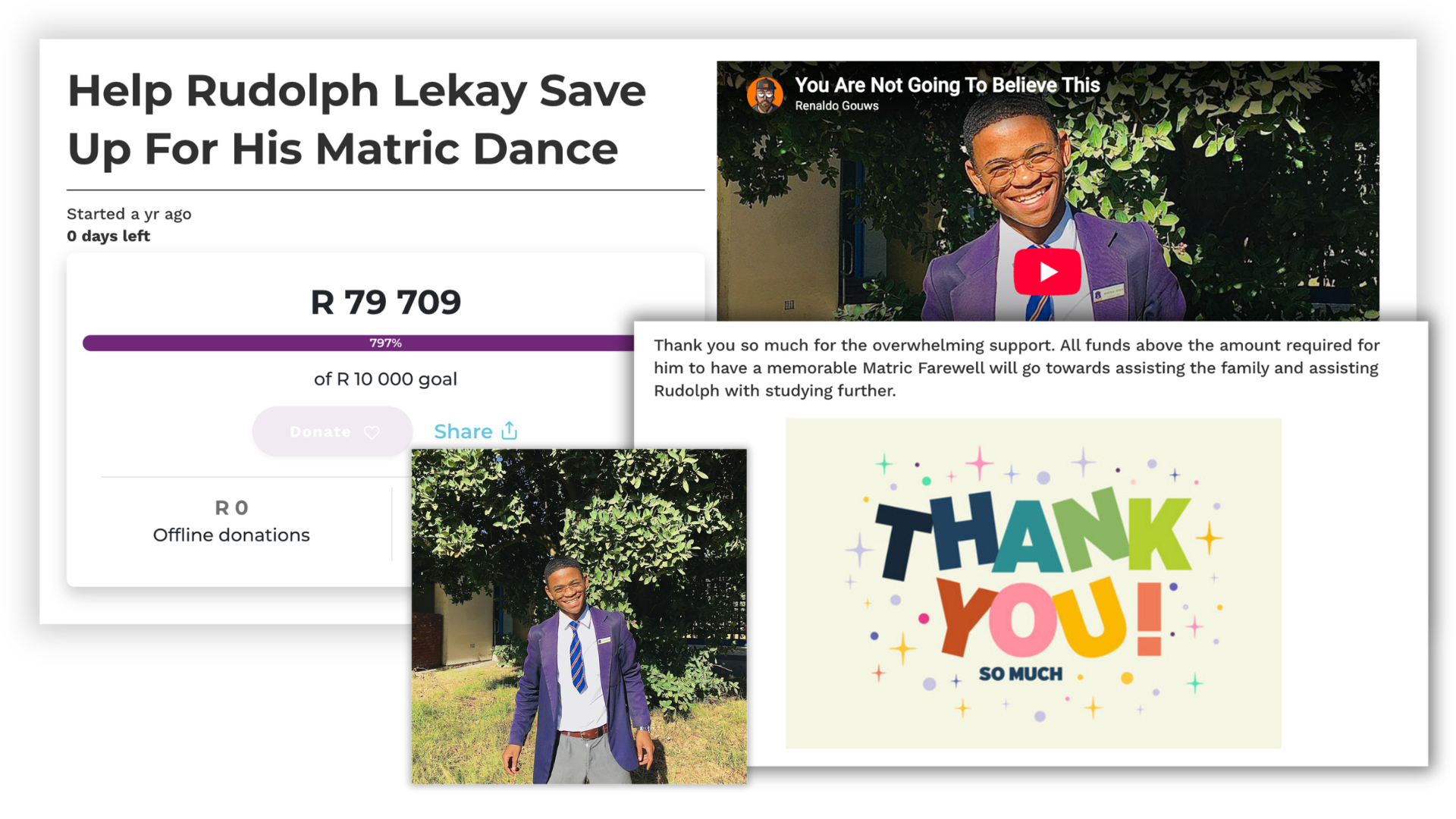
After the matric ball, don’t forget to post a final update with photos from the event. Supporters love seeing the positive outcome of their contributions and sharing in the joy of your special evening. Check out Rudolph’s campaign for a great example of how to use updates on your campaign wall, in your campaign copy, and in a video.
Consider a Group Campaign
If several friends are facing similar financial challenges, you may want to consider creating a group fundraising campaign. The Ocean View Matric Night School learners did exactly this with their campaign and managed to raise 65% of their total fundraising goal.
Fundraising together allows you to combine networks, reach more potential supporters, and share the workload. Group campaigns can also create opportunities for collaborative social media content and community engagement.
Local businesses such as dressmakers, tailors, hair salons, photographers, and transport providers may be more willing to offer discounts or sponsorships when supporting a group of students rather than individuals. Group campaigns showcase teamwork, friendship, and community spirit, qualities that often resonate strongly with supporters.
Step Into Your Red Carpet Moment
Your Matric Ball is a celebration of everything you have achieved and an opportunity to create memories that will last a lifetime. Financial challenges should not prevent you from participating in this important milestone.
Through matric ball fundraising and community support, you can raise money for your matric farewell and invite others to be part of your journey.
For many parents, school fundraising can sometimes feel like a second job. From bake sales to raffle tickets and all the civvies day in between, parents and teachers are left to juggle all of it. While traditional school fundraising ideas still work, when schools need to fund something bigger — like upgrading classrooms, replacing ageing computers, improving sports facilities, or buying educational resources — traditional fundraising can only go so far. That’s why more PTAs and school communities are exploring crowdfunding for school projects.
Across South Africa, many schools continue to face infrastructure and resource challenges that directly affect learners and educators. According to theBasic Education Handbook on School Infrastructure and Equipment in South Africa, access to proper facilities and learning resources remains an important part of creating supportive learning environments.
With the right support and a clear goal, crowdfunding can help schools bring important projects to life.
What Is Crowdfunding for School Projects?
Crowdfunding for school projects is the process of raising money online from parents, alumni, businesses, and supporters to fund educational initiatives and school improvements. Unlike traditional fundraising events, crowdfunding allows schools to reach people beyond their immediate community while making donations simple, transparent, and easy to share.
For many PTAs, it has become one of the most effective modern school fundraising ideas because it allows communities to directly support projects that improve learners’ daily experiences.
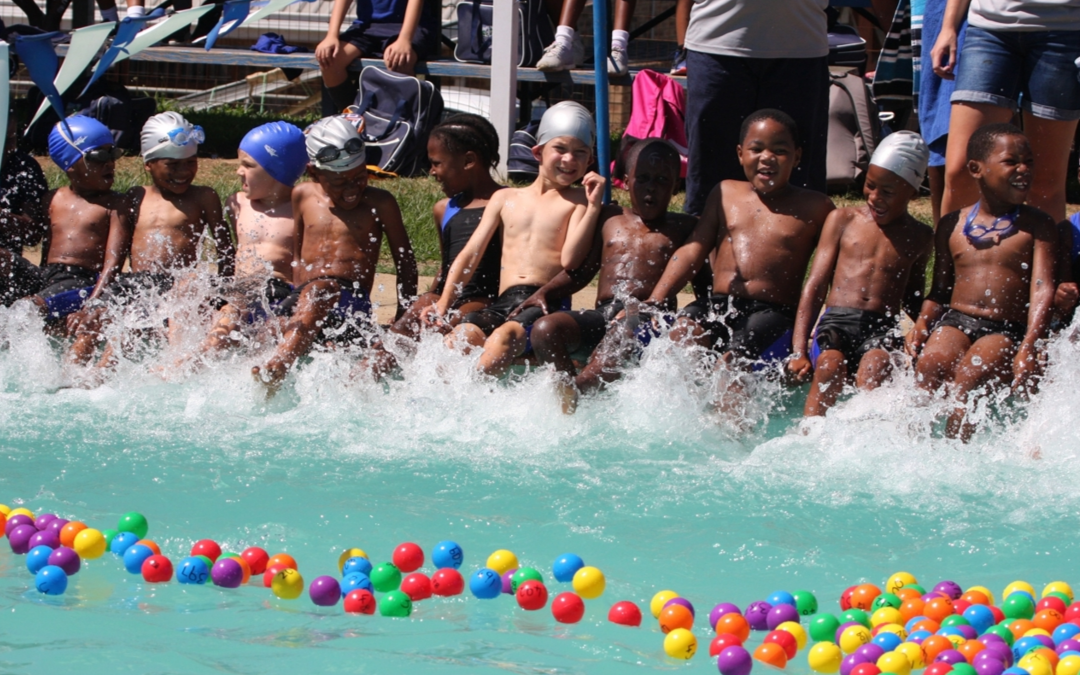
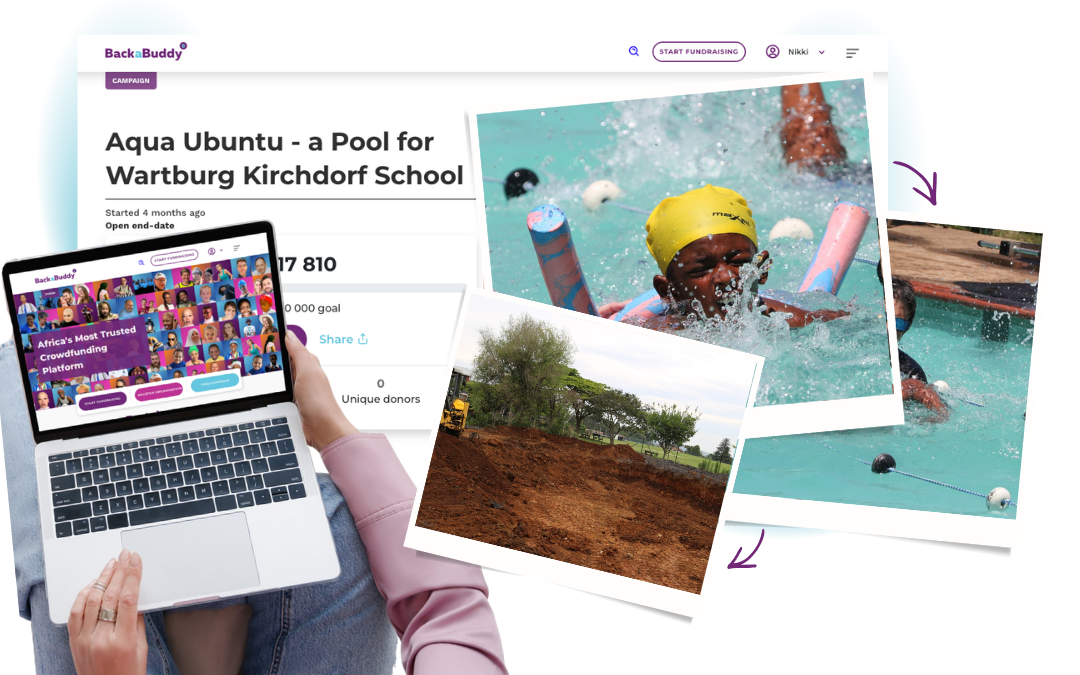
👉 See it live: Check out this live example from The Wartburg Kirchdorf School. They’re fundraising for a school pool.
Should Your School Start a Crowdfunding Campaign?
School fundraising events usually depend on the same group of people showing up again and again. Crowdfunding allows schools to reach beyond their immediate communities, and mobilise networks of support like:
Alumni
Grandparents
Local businesses
Former teachers
Extended family members
Community supporters
Families living overseas
Because donations happen online, supporters can contribute quickly and easily from anywhere in the world. When people understand how a project could improve learners’ day-to-day experiences, they’re often far more willing to help. Many school communities already have people who genuinely want to contribute. Often, they simply need a clearer and more accessible way to do it.
How to Start a Crowdfunding Campaign for Your School
1. Start With One Clear Fundraising Goal
One of the biggest mistakes school fundraising campaigns make is trying to raise money for too many things at once. Before launching a campaign, sit down with school leadership and identify:
One urgent need
One realistic fundraising target
One project that will visibly improve the learner experience
Specificity builds trust. People are more likely to support a fundraiser when they can clearly picture the outcome.
2. Tell a Story People Can Connect With
At the heart of every successful fundraising campaign is human connection. People donate because they care about people — especially children and opportunities that can shape their futures. Your campaign page should feel honest, personal, and genuine. It shouldn’t read like a formal budget report or a school memo.
Instead of only explaining what the school needs, explain why the project matters. Ask questions like:
How will this project improve learners’ daily experiences?
What opportunities will students gain?
What challenges does the school currently face?
What happens if funding never arrives?
People are much more likely to support a campaign when the story feels relatable and real.
Strong visuals can make a significant difference to how people respond to a fundraiser. You don’t need professionally produced videos or expensive photography. Sometimes a simple smartphone video featuring:
Learners
Teachers
PTA members
School staff
Photos and videos help supporters better understand the impact the fundraiser could have.
3. Build Momentum Before Sharing Publicly
One of the biggest misconceptions about crowdfunding for school projects is that you can simply launch a fundraiser and expect strangers to find it. In reality, the strongest fundraising campaigns usually grow from the inside out. Think about supporters in three circles:
Your Inner Circle
Who: PTA members, teachers, and close school families
What: They help create early momentum with the first donations.
The Second Circle
Who: Alumni, grandparents, extended family, broader parent body
What: They expand the campaign’s reach by sharing it online.
The Outer Circle
Who: Local businesses, neighbours, community supporters
What: They are more likely to contribute once they see visible support and activity.
Before promoting the campaign publicly, it helps to make sure your inner circle has already contributed to and shared the fundraiser. When people land on a campaign page that already has donations, comments, and visible support, it naturally feels more trustworthy.
👉 See it live: Campaigns likeWacky Windows – Finish Classrooms, Build Hope! show how communities can come together to support meaningful educational projects. Launched to help complete classrooms for learners in Jeffreys Bay, the campaign demonstrates how school community fundraising can directly improve learning environments and create long-term impact for students.
4. Don’t Overlook Local Businesses
When thinking about how PTA can fund school projects, local businesses are often one of the most overlooked opportunities. Many neighbourhood businesses genuinely want to support schools because it strengthens local relationships, builds goodwill, and aligns their brand with positive community impact.
Instead of simply asking for donations, try to create partnerships that feel beneficial for everyone involved. For example, schools can:
Feature sponsors in newsletters
Thank businesses publicly on social media
Include logos on campaign materials
Recognise supporters at school events
Even one business sponsor or matched donation can help build meaningful momentum for a fundraiser.
5. Keep Donors Updated Throughout the Campaign
One of the most overlooked parts of crowdfunding for school projects is communication after the donations start coming in. The moment someone contributes to a fundraiser, they become invested in the school’s story and progress. Regular updates help supporters feel included and reassured that the campaign is moving forward. Share updates like:
Fundraising milestones
Behind-the-scenes progress
Photos of the project underway
Learner reactions
Completion updates
Keeping supporters informed helps maintain trust and encourages ongoing engagement throughout the campaign.
Practical Examples of School Projects
Some of the most successful education donation campaigns focus on:
Classroom upgrades
Library improvements
Sports equipment
Computer labs
Feeding programmes
Educational resources
Playground renovations
The clearer the project feels, the easier it becomes for supporters to understand why it matters.
Common Mistakes School Fundraising Campaigns Should Avoid
Even strong fundraising campaigns can lose momentum if a few important details are overlooked. Some of the most common mistakes include:
Launching campaigns before securing early donations
Setting vague fundraising goals
Using poor-quality visuals
Failing to post regular updates
Running campaigns for too long without creating urgency
Making donation pages too text-heavy
Most of these challenges are easy to avoid with thoughtful planning and clear communication.
Every School Project Starts With One Story
Meaningful school improvements don’t always require years of exhausting fundraising events. With the right story, a united support base, and a clear goal, crowdfunding for school projects can help PTAs raise funds while bringing communities together around something meaningful.
Whether a school is raising money for classroom technology, sports facilities, feeding programmes, library upgrades, or educational resources, every successful campaign starts with one simple thing: helping people understand why the project matters.
Every learner deserves access to an environment where they can learn, grow, and feel supported. Learn more about creating a fundraising campaign on BackaBuddy and explore ways your school community can work together to support meaningful projects.
In 2018, South Africans—and supporters from around the globe—rallied behind the Trevor Noah Foundation’s very first major crowdfunding campaign for #GivingTuesdaySA. This wasn’t just a fundraiser; it was a movement, igniting hope and affirming the belief that education is the most powerful tool we have to break the cycle of poverty and build a brighter, more inclusive South Africa.
That same year, comedian Trevor Noah launched the Trevor Noah Foundation (TNF) with a bold vision: to see every generation of South Africans empowered through quality education to rise above their circumstances and build on the progress of those before them. At the heart of this vision was a deep commitment to the youth—especially those facing some of life’s toughest challenges.
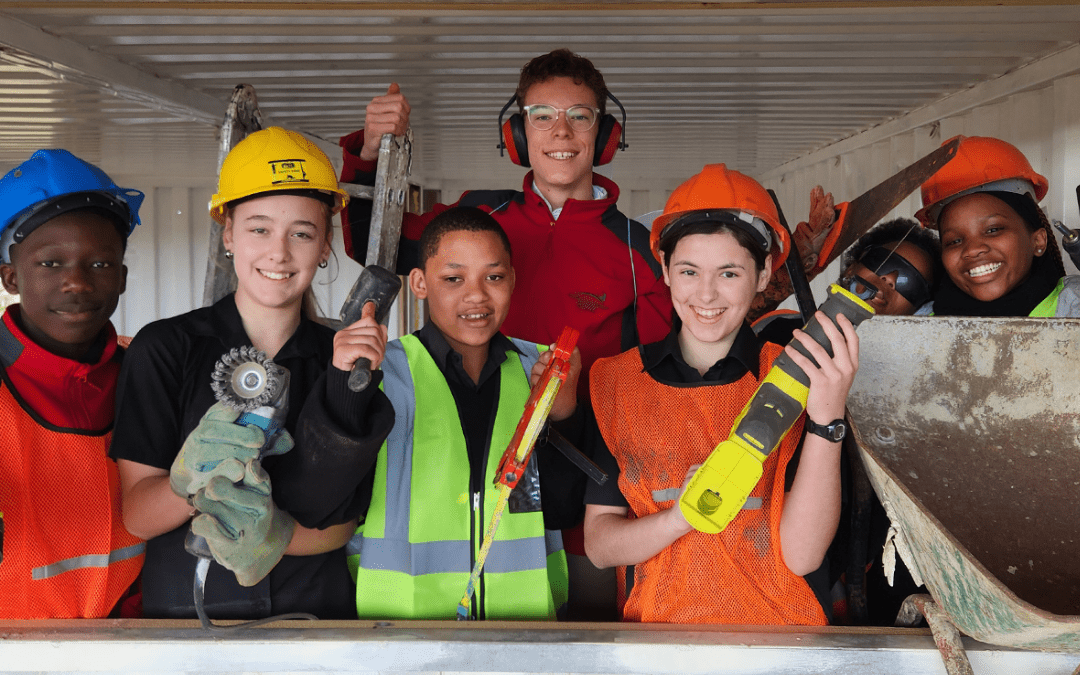
TNF’s pilot programme began at New Nation School in Vrededorp, a spirited and resilient government school that continues to thrive against the odds. Many of its learners come from vulnerable backgrounds, including poverty, abandonment, and even statelessness. Yet, they show up, work hard, and dream big.
Thanks to generous donor support, the Foundation was able to invest in vital areas like digital literacy, infrastructure upgrades, and teacher development. These contributions gave learners access to the tools and training they need to thrive in a fast-changing world. By creating a nurturing learning environment with skilled, compassionate educators, TNF laid the foundation for lasting change.
To amplify the campaign’s success, Trevor Noah personally pledged to match every donation—rand for rand—up to R2 million. This heartfelt gesture didn’t just double the impact; it inspired thousands to step up and be part of something meaningful. While special incentives like signed books and VIP experiences added to the excitement, it was the shared belief in the life-changing power of education that truly united supporters.
Together, donors raised R153 000 during the 2018 #GivingTuesdaySA campaign—a significant and meaningful contribution that set the stage for years of impact. More than just a number, it represented thousands of acts of kindness, moments of generosity, and a shared commitment to a better tomorrow.
The success of this campaign marked the beginning of a powerful journey. Donors became co-creators of a legacy that continues to grow—supporting TNF’s mission to achieve a 100% transition rate for matric students into further education. Because of that first spark, countless learners now walk a path paved with possibility.
Years later, the ripples of that first campaign are still being felt. It proved that when we come together and invest in education, we plant seeds of opportunity, resilience, and hope—for today, and for generations to come.
Donate to a campaign that inspires you and join a community of donors make a difference
In 2020, cricketer JP Duminy launched the Be Someone’s Tomorrow campaign in support of the South African Bone Marrow Registry (SABMR), calling on the public to help patients fighting life-threatening blood disorders access the stem cell transplants they urgently needed. What followed was an extraordinary outpouring of compassion. Through the BackaBuddy platform, generous donors came together to raise R2 800 towards the R300 000 goal — a heartfelt reminder that even the smallest contributions can spark immense hope and change lives.
For donors, this campaign went beyond a festive season appeal — it became a personal mission to offer second chances to those who had run out of options. Every contribution, whether large or small, helped ease the burden on patients and their families. Many South Africans, especially those without medical aid, simply cannot afford the high costs associated with finding a matching donor. Thanks to the generosity of donors, the SABMR’s Patient Assistance Programme was able to cover expenses such as donor recruitment, tissue typing, and transplant-related medical bills.
What moved so many to support the campaign was its deeply human focus. Donors weren’t just giving to a cause — they were giving to real people: an 11-year-old girl, a mother, a grandfather. Behind every rand donated was a heartfelt belief that no one should be denied the chance to live because of financial barriers. The idea of families spending Christmas in hospital instead of around a table with loved ones resonated deeply with many supporters, particularly during the emotional highs and lows of the holiday season.
The campaign also sparked much-needed awareness around the lack of ethnic representation on the bone marrow registry. Many donors were alarmed to learn how poorly represented people of colour are on the SABMR database — with coloured, black, and Indian donors collectively making up less than 30% of the registry. This imbalance means that patients of colour face much slimmer odds of finding a match. For many supporters, this knowledge became a turning point, prompting them to not only donate but also sign up as potential donors themselves.
Donors were instrumental in shifting this reality. Their support didn’t just help individuals in crisis — it sent a wider message about equity, representation, and the power of community. By funding critical searches and treatments, they helped ensure that patients from all walks of life were given a fighting chance, regardless of their financial means or background.
The Be Someone’s Tomorrow campaign was a reminder of what’s possible when compassion leads the way. It proved that when donors rally together with purpose, lives are saved, hope is restored, and families are reunited. Today, the impact of their kindness continues to echo through every successful transplant and every patient who got to go home — because someone, somewhere, chose to care.
For those who were part of the journey in 2020, the results speak for themselves: your generosity changed lives.
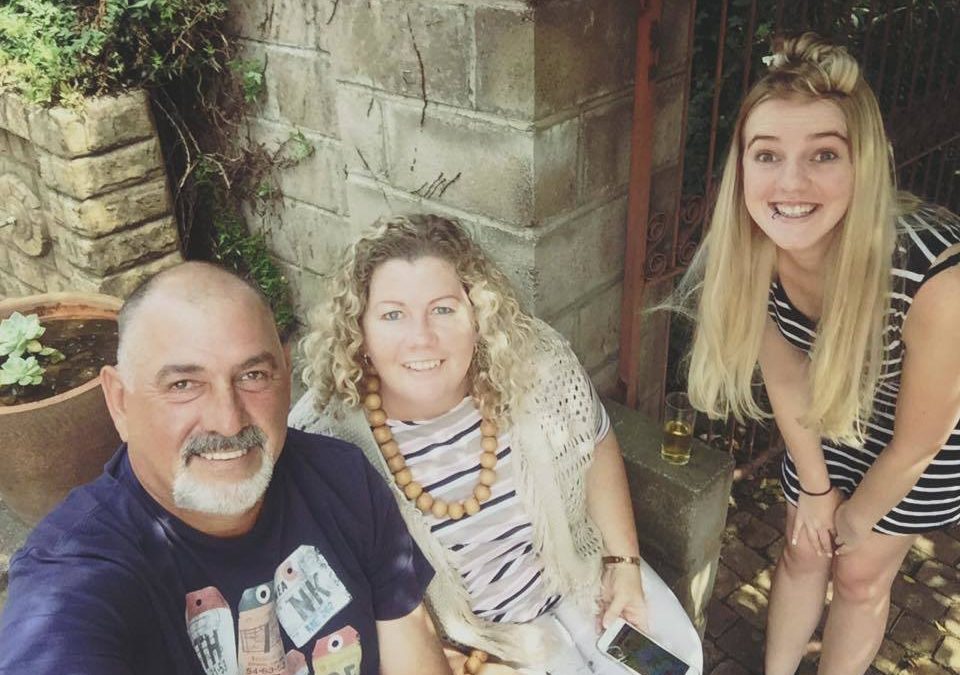
In the quiet corridors of generosity, some stories shine not only because of their emotional weight, but because of the extraordinary people who choose to act with compassion. One such person is Catherine du Plooy, Chief Growth Officer at BackaBuddy, and one of our generous staff donors.
Catherine recently chose to support the Stand by Theo & Geraldine campaign, a heartfelt initiative launched to support a beloved couple in her community after Theo’s sudden cancer diagnosis. But for Catherine, this wasn’t just another campaign, it was deeply personal.
“They’re dear friends of our family and have been for many years,” she shares. “Theo has always had such a generous heart, always looking to help others. His dad was friends with my grandfather, and their farm is right next to ours. They’re just genuinely kind, salt-of-the-earth people.”
Theo’s diagnosis came as a shock, a reminder of how life can change in an instant. “It hit close to home,” Catherine says. “My brother is also living with cancer, so I deeply understand the shock and the weight that a diagnosis like this brings. One day Theo was healthy, and the next, everything changed. It really reminds you how fragile and precious life is.”
As BackaBuddy’s CGO, Catherine spends her days empowering others to fundraise and find hope through the power of community. But this time, it was her own community that needed support, and she didn’t hesitate to lead by example.
“It feels good to be able to support them, but I also wish we could all do more,” she says. “People like Theo and Geraldine have poured so much into their community, it’s only right that we rally around them now.”
Catherine’s act of giving is more than a donation, it’s a reflection of her values, both as a leader and as a friend. “There’s something incredibly powerful about people coming together,” she reflects. “Especially when it’s for someone who has been a blessing to others, it’s like the kindness gets multiplied.”
At BackaBuddy, we are proud to have leaders who lead with heart. Catherine, thank you for showing us what it means to live out the mission, not only in the work you do but in the way you give.